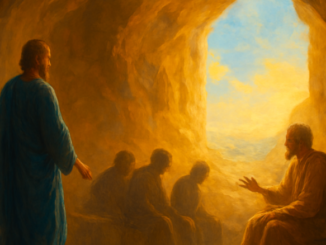
Symbolic cave with light streaming in representing Plato's allegory and Freemasonry
Plato – Freemasonry & Connection

Plato’s Cave Allegory: A Practical Guide to Connection

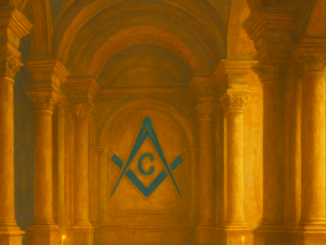
You probably know the feeling. You experience an insight that changes your life — a moment of clarity that shifts everything. And then comes the real challenge: how do you share it with others? How do you help someone else see the same light? This is precisely the question Plato posed more than two thousand years ago in his famous cave allegory. And it is precisely the question that Freemasonry answers anew every day within its lodges. The Prisoner Who Returns In Book VII of The Republic, Plato describes a group of prisoners chained inside a cave. All they can see are shadows flickering on the wall, and they mistake these shadows for reality. When one prisoner is freed and steps outside, he discovers sunlight and the real world for the first time. But here is the crucial point: he goes back into the cave. Not because he has to, but because he chooses to. He feels a responsibility to help the others. This is not some abstract philosophical thought experiment. It is a practical calling you can act on today. The freed prisoner chooses to seek connection with those still in darkness. He could have stayed outside, basking in […]
Artistic depiction of Plato's Cave Allegory showing shadows and light
Plato – Philosophical Background

Plato’s Cave Allegory: The Philosophical Roots of Light

A fire flickers behind chained figures. Shadows dance across a stone wall. The prisoners see nothing but these flickering shapes and take them for reality. This image — perhaps the most famous philosophical parable in Western history — lies at the heart of Book VII of Plato’s Republic. But this story did not emerge from a vacuum. It carries the traces of centuries of Greek philosophy, mystical traditions, and one extraordinary teacher whose death would mark Plato forever. The Shadow of Socrates No figure casts a longer shadow over Plato’s thought than Socrates. The man who roamed the Athenian marketplace compelling his fellow citizens toward self-examination through relentless questioning becomes, in the Cave Allegory, the freed prisoner who returns to liberate the others. This is no coincidence. When Athens condemned Socrates to death in 399 BCE, Plato lost not only his teacher but also his illusions about the enlightenment of his own city-state. The return of the freed man to the cave — where he is mocked and threatened by the very people he seeks to liberate — mirrors the fate of Socrates. Here we see how personal experience and philosophical abstraction flow together. The allegory is simultaneously a metaphysical […]