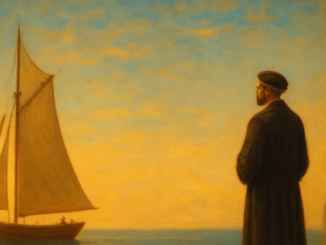
Montaigne on Frugality: Lessons from the Ancients
Imagine opening your wardrobe to find more than fifty shirts when you wear no more than three on any given day. Your kitchen cabinets overflow with gadgets used exactly once. Your bank statement reveals you spend more each month on subscriptions than on fresh vegetables. It is a familiar picture in our age of abundance. In the sixteenth century, Michel de Montaigne wrote a short but powerful essay that exposes precisely this tension: ‘Of the Parsimony of the Ancients.’ Found in the first book of his celebrated Essays, it holds up a mirror that, after more than four hundred years, remains sharp enough to give us pause. The Heart of the Essay In this fifty-second essay of Book One, Montaigne investigates a question that sounds simple yet runs surprisingly deep: why did our ancestors live so much more soberly than we do, and were they perhaps happier for it? Turning his gaze to Roman and Greek antiquity, he observes that the great statesmen and generals of old led remarkably modest lives. Figures such as Cato the Elder — the stern Roman censor famous for his uncompromising austerity — serve as guiding examples. Montaigne describes how these men bore enormous responsibilities, […]