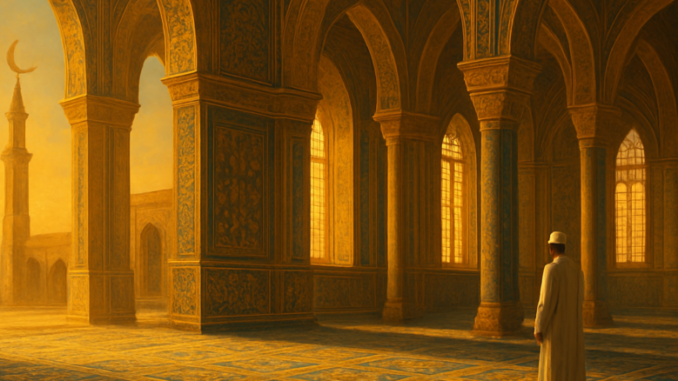
Imagine standing at the threshold of a journey that will transform your entire being. You leave behind status, comfort, and familiar habits. You join thousands of others pursuing the same goal, dressed in simple white garments that erase all outward distinctions. This is the essence of pilgrimage as described in Surah Al-Hajj, the twenty-second chapter of the Quran. And remarkably, this description resonates with something every Freemason recognizes: the conscious decision to embark on an inner journey that changes you forever.
What Surah Al-Hajj Teaches Us About Transformation
Surah Al-Hajj, named after the great pilgrimage to Mecca, reaches far beyond a physical journey. The text describes how pilgrims shed their ego, surrender to something greater than themselves, and return as changed individuals. The surah opens with a powerful reminder of the transience of earthly existence and calls for humility. This is not abstract theology — it is a concrete call to action.
The pilgrimage requires you to literally leave your daily identity behind. No expensive clothing, no status symbols, no distinction between rich and poor. Everyone wears the same simple white garments. This equality is not a symbolic gesture but a profound practice that forces you to see yourself without masks. Does this sound familiar? It is precisely what happens when someone first enters a Masonic lodge.
The Practice of Shedding the Ego
In Freemasonry, we speak of divesting ourselves of metals — leaving behind outward valuables before entering the temple. The pilgrim bound for Mecca does essentially the same thing: setting aside all external marks of distinction to enter sacred space as an equal among equals. This is no coincidence. Both traditions understand that genuine spiritual growth only begins when we stop defining ourselves by possessions, status, or lineage.
Every sincere pilgrimage — whether to Mecca or into the depths of your own soul — begins with the courage to remove your masks and see yourself as you truly are.
How can you apply this in your own life? Start with a simple exercise. Choose one day on which you consciously step away from the things that normally define you. Don’t wear a watch, leave your phone at home during a walk, or spend time without talking about your work or achievements. Observe what happens when you temporarily strip away these layers. What thoughts arise? What discomfort do you feel? That discomfort is precisely where growth begins.
Brotherhood Beyond All Borders
Surah Al-Hajj emphasizes that the pilgrimage brings together people from every walk of life. The text speaks of people arriving on foot, on weary camels, from distant valleys. It does not matter where you come from or how you travel. What matters is that you arrive with a sincere heart. This universal brotherhood, built on shared intention rather than shared origin, is one of the most practical lessons we can draw from the text.
Freemasonry has embraced this very principle of universal brotherhood since the eighteenth century, when James Anderson and John Theophilus Desaguliers drafted the first Constitutions. Men of different religions, backgrounds, and convictions come together around shared values. Just as the pilgrims described in Al-Hajj set aside their differences during the sacred journey, Freemasons learn to look beyond superficial distinctions toward what connects us as human beings.
Concrete Steps for Your Own Spiritual Journey
You do not need to travel to Mecca or join a lodge to apply the lessons of Al-Hajj. Here are three practical ways to integrate the essence of pilgrimage into your daily life:
Create conscious transitions. Before you begin an important task or enter a meaningful conversation, take five seconds to mentally prepare. This is your personal ritual — your moment of shedding distraction and becoming fully present.
Seek equals beyond your bubble. Engage in genuine conversation with someone whose background, faith, or worldview is fundamentally different from your own. Listen with the intention to understand, not to convince.
Plan a symbolic journey. This could be a silent walk, a day of reflection, or a visit to a place that holds meaning for your inner development. Physical movement supports mental transformation — the body in motion helps the mind move forward too.
Returning as a Changed Person
Surah Al-Hajj makes clear that pilgrimage is not an end in itself. What matters is who you are when you return. The rituals, the hardships, the communion with others — all of it serves to transform you so that you become a better person in your everyday life. The pilgrim comes home with new eyes, a softer heart, and a deeper understanding of their place in the greater whole.
This is also the promise of every authentic spiritual tradition, Freemasonry included. It is not about what you do within the temple walls or during the pilgrimage itself. It is about how you act when you return to the ordinary world. Have you become more patient? Less judgmental? More inclined to listen rather than to speak? These are the true fruits of every pilgrimage.
An Invitation to Reflect
When did you last consciously step away from everything that defines you? When did you allow yourself to be vulnerable and equal to others, without the protection of your usual roles? The lessons of Al-Hajj invite us to ask these questions regularly — not as an intellectual exercise, but as a practical guide toward a more meaningful life.
Surah Al-Hajj reminds us that spiritual growth is not a passive state but an active journey requiring courage, humility, and community. Whether you are Muslim, a Freemason, or simply a seeker of truth, the principles are universal: shed your ego, see yourself honestly, embrace those who are different from you, and return to your daily life with renewed purpose. The pilgrimage never truly ends — it simply continues in a different form, one step at a time.
The parallels between the pilgrimage described in Surah Al-Hajj and the Masonic journey are striking — not because one tradition borrowed from the other, but because both tap into a universal human truth. Transformation demands that we strip away pretense, stand as equals in sacred space, and carry the lessons we learn back into the world. Whether through the rituals of the Hajj or the degrees of Freemasonry, the invitation is the same: begin the inner journey, embrace what you discover, and let it change the way you walk through life.
Copyright text & image: devrijmetselaar.nl
Texts are based on the ideas and content of the author of devrijmetselaar.nl, reviewed, corrected, and supplemented with the assistance of OpenAI. Images are created based on the ideas of the author of devrijmetselaar.nl using OpenAI/DALL-E.


Be the first to comment