Vrijmetselarij - Seneca over reizen als vlucht: filosofische wortels ontdekt
Lucius Annaeus Seneca – Letters to Lucilius

Seneca on Travel as Escape: Philosophical Roots Explored

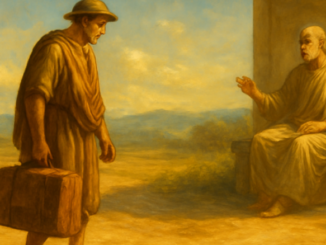
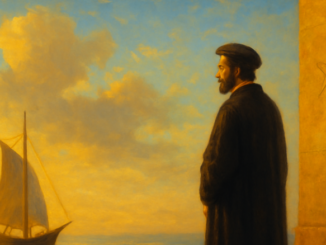
Why do we sometimes feel compelled to leave, even when we know deep down that no destination will change a thing? Lucius Annaeus Seneca posed this very question nearly two thousand years ago in his twenty-eighth letter to Lucilius. His answer strikes at the heart of Stoic philosophy and echoes a wisdom that also runs through the traditions of Freemasonry: the inward journey is the only journey that truly matters. What Was Seneca Really Saying in Letter XXVIII? In Letter XXVIII, Seneca addresses his friend Lucilius, who has apparently been traveling from place to place in search of peace of mind. Seneca’s message is unequivocal: you carry yourself wherever you go. The problem does not lie in the place where you happen to be — it lies in the restlessness you bring with you. This is no casual observation. It is rooted deeply in the Stoic tradition that Seneca inherited from his predecessors and refined into a living philosophy. The Stoics held that external circumstances are inherently neutral. It is our judgment of situations that produces suffering or joy. When someone travels to escape problems, they merely change the scenery — not the inner drama. Seneca reminds Lucilius that Socrates […]
Vrijmetselarij - Seneca over reizen als vlucht: wat vrijmetselaars kunnen leren
Lucius Annaeus Seneca – Freemasonry & Connection

Seneca on Travel as Escape: Lessons for Freemasons

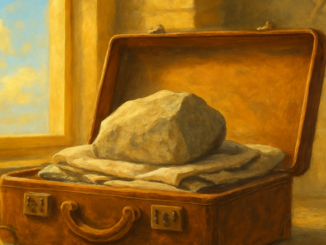
The suitcase stands packed by the door. A Freemason gazes out the window, ready to depart for a distant destination. Perhaps this trip will finally bring the peace he seeks — distance from daily worries, a chance to rediscover himself. But as he reaches for his keys, an ancient voice echoes in his mind: “Why do you think a new place will cure what you carry inside?” It is the voice of Lucius Annaeus Seneca, the Stoic philosopher who understood nearly two thousand years ago that changing your geography rarely solves your inner turmoil. The Illusion of the Distant Horizon In his twenty-eighth letter to his friend Lucilius, Seneca poses a question that still burns today: why do people keep traveling in the hope that a new environment will solve their problems? The first-century philosopher describes how people drift from city to city, from landscape to landscape, endlessly searching for something they cannot find — not because it doesn’t exist, but because they are looking in the wrong place. “You change your sky, not your soul,” he writes with characteristic sharpness. The baggage we most wish to leave behind always travels with us: ourselves. For Freemasons, this observation rings deeply […]

Pilgrims in white garments symbolizing the inner journey of Freemasonry
Islam

Pilgrimage as Inner Journey: Lessons from Surah Al-Hajj

Imagine standing at the threshold of a journey that will transform your entire being. You leave behind status, comfort, and familiar habits. You join thousands of others pursuing the same goal, dressed in simple white garments that erase all outward distinctions. This is the essence of pilgrimage as described in Surah Al-Hajj, the twenty-second chapter of the Quran. And remarkably, this description resonates with something every Freemason recognizes: the conscious decision to embark on an inner journey that changes you forever. What Surah Al-Hajj Teaches Us About Transformation Surah Al-Hajj, named after the great pilgrimage to Mecca, reaches far beyond a physical journey. The text describes how pilgrims shed their ego, surrender to something greater than themselves, and return as changed individuals. The surah opens with a powerful reminder of the transience of earthly existence and calls for humility. This is not abstract theology — it is a concrete call to action. The pilgrimage requires you to literally leave your daily identity behind. No expensive clothing, no status symbols, no distinction between rich and poor. Everyone wears the same simple white garments. This equality is not a symbolic gesture but a profound practice that forces you to see yourself without […]

Burning bush in the desert symbolizing spiritual illumination and Masonic light
Islam

Surah Ta-Ha: The Inner Journey of Moses and the Seeker

There are moments when life takes an unexpected turn — an encounter, an insight, an experience you never planned for, yet one that changes everything. Surah Ta-Ha, the twentieth chapter of the Quran, tells the story of just such a turning point in the life of the prophet Moses. And remarkably, this ancient narrative touches on the very themes that Freemasons have contemplated for centuries: the calling that finds you when you are not looking for it, the fire that illuminates without consuming, and the courage to embark on a journey whose destination remains unknown. The Mysterious Opening Letters Ta-Ha. Two Arabic letters that give the surah its name, yet whose meaning no one knows with certainty. Some scholars interpret them as a form of address, others as a reference to hidden wisdom. It is precisely this mystery that makes the opening so powerful. From the very first syllables, you are invited to look beyond the surface, to search for meaning that is not immediately visible. For Freemasons, this is a familiar principle. In the lodge, we work with symbols that carry no single fixed meaning — symbols that, through their very ambiguity, invite reflection. Just as the rough ashlar […]

Open Torah scroll symbolising Devarim and the Masonic inner journey
Judaism

Devarim: The Book of Words and the Inner Journey

Imagine standing at the edge of a new beginning. Behind you lie years of growth, hard-won lessons, and sometimes painful detours. Ahead stretches unknown terrain. This is the moment when you must distill everything you have learned — not only for yourself, but for those who will follow. That profoundly human moment lies at the heart of Devarim, the fifth and final book of the Torah. In this concluding article of our series on the Torah, we explore how ancient words and the modern search for meaning continue to speak to one another. Words at the Threshold Devarim means literally “words,” and the book opens with Moses addressing his people at the border of the Promised Land. It is a book of looking back and looking forward at the same time. Moses knows he will not cross over. Yet instead of bitterness, he chooses to teach. He restates the law — not as a dry set of rules, but as living guidance for a people who must learn to stand on their own. Perhaps you recognise this feeling. There come moments in life when you realise that certain knowledge must not die with you. Whether you are an elder passing […]

A veiled figure in silent grief, symbolizing Montaigne's essay on sadness
Content & Summary

Montaigne on Grief: When Words Fall Short

There comes a moment when grief cuts so deep that it turns to silence. Tears refuse to fall, words catch in the throat, and what remains is a stillness that weighs more than any gesture. Michel de Montaigne explored this phenomenon in his brief but penetrating essay ‘On Sadness,’ the second chapter of his monumental Essays. He poses a question that resonates as powerfully today as it did in the sixteenth century: what happens when emotion exceeds the limits of expression? The Core Idea: Emotion Beyond Expression Montaigne opens his essay with a striking claim: he professes to be hardly susceptible to sadness himself. This is not an attempt at Stoic indifference but rather a runway toward his real subject. What fascinates him are those moments when grief becomes so overwhelming that the body simply cannot express it. Instead of releasing us, the sheer intensity of the emotion paralyzes us. This central insight illuminates a paradox most of us recognize: the most intense feelings sometimes manifest as total silence. A mother who loses her child may appear calm while others weep around her. Only later, when the initial shock begins to subside, do the tears come. Montaigne sees in this […]

Rough ashlar stone and chisel symbolizing Masonic self-improvement journey
Personal Development & Leadership

The Broken Journey: Personality Beyond Appearances

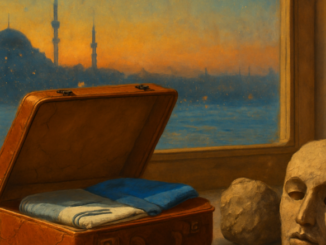
A journey begins with a suitcase. We pack clothes, toiletries, perhaps a book. But what we truly carry with us is invisible: our expectations, our fears, our hopes of escaping the routines of daily life. When a journey ends in tragedy — as happened recently with a German family in Istanbul — we are confronted with the fragility of existence. And with a deeper question: who were these people, really, beyond the headlines? This question touches on something essential that Freemasonry continually explores: the mystery of personality itself. The Mask and the Face The word “personality” derives from the Latin persona, which originally referred to the mask worn by actors in Roman theater. The mask concealed the actor’s true face while simultaneously amplifying the voice and making the character recognizable to the audience. There is a striking paradox here that deserves reflection: our masks both hide and reveal at the same time. When a court examines a case involving the loss of human life, it attempts to see through the masks. Judges weigh facts, but also intentions, backgrounds, and the inner state of those involved. They search for the essence behind the actions. This is a task we all perform […]