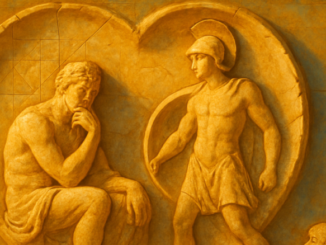
Vrijmetselarij - Plato over de ziel: filosofische wortels van innerlijke harmonie
Plato – Philosophical Background

Plato’s Tripartite Soul: Philosophical Roots of Inner Harmony

What truly drives a human being? Is it desire, reason, or something in between? These questions were posed by Plato more than two thousand years ago in Book IV of The Republic. His answers about the tripartite soul still form a philosophical bedrock for anyone engaged in the pursuit of self-knowledge and inner growth — and they resonate with particular force within traditions devoted to personal refinement, including Freemasonry. Why Did Plato Divide the Soul into Three Parts? Plato did not invent the question of what the soul is made of. Greek thinkers before him had already wrestled with the mystery of human behavior. Why do people sometimes act against their own best interests? Why do we experience inner conflict? Plato’s predecessors — most notably the Pythagoreans — had already speculated that the soul was something that needed to be purified and brought into order. Pythagoras viewed the cosmos as a harmonious whole in which numbers and proportions held the key to understanding. This cosmic harmony, he believed, should also be reflected within the individual soul. Plato took this intuition and refined it. In Republic IV, he introduces his famous tripartite division: the rational part (logos), the spirited part (thumos), […]
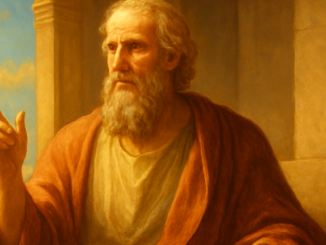
Illustration of Plato's tripartite soul with Masonic square and compasses
Plato – Content & Summary

Plato’s Tripartite Soul: Lessons for Freemasonry

In the fourth book of The Republic, Plato presents a vision of the human soul that has inspired thinkers for more than two thousand years. Written around 375 BCE in an Athens torn by political upheaval and the haunting memory of Socrates’ execution, this dialogue sought to answer a deceptively simple question: what is justice? Plato’s answer — that the soul is composed of three distinct parts, each with its own function and virtue — became a cornerstone of Western philosophy. But its resonance extends far beyond academic circles. Traditions devoted to inner growth and self-knowledge, including Freemasonry, continue to draw deeply from this well of ancient wisdom. The Historical Context of Book IV Plato wrote The Republic during a period of profound political crisis. Athens had suffered a devastating defeat in the Peloponnesian War, its democracy had been temporarily overthrown by oligarchs, and the city had condemned Socrates — Plato’s beloved teacher — to death. Against this backdrop of chaos and disillusionment, Plato searched for a foundation upon which a truly just society could be built. In Book IV, the dialogue takes a decisive turn. Socrates, the central figure of the conversation, argues that justice in the state can […]