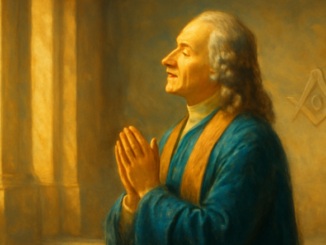
Explore the philosophical foundations of Deism and its profound influence on Freemasonry, Enlightenment thought, and spiritual rationalism throughout history.
Symbolism & Rituals
Voltaire on God: Key Ideas from the Philosophical Dictionary
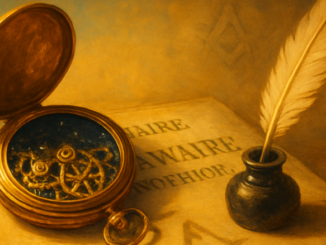
When the eighteenth-century thinker François-Marie Arouet — better known as Voltaire — picked up his pen to write about God, he did so with the precision of a surgeon and the wonder of a child. His entry “On God” in the 1764 Philosophical Dictionary remains one of the most influential texts ever written on the relationship between reason and faith. For Freemasons, who place the Great Architect of the Universe at the center of their philosophy without prescribing any specific religion, Voltaire’s approach offers remarkably familiar ground. The Core Idea: God as Watchmaker Voltaire opens his reflection with a question that has echoed through the centuries: can we know anything about God with certainty? His answer is characteristically nuanced. He rejects the personal, punishing God of orthodox religion, yet at the same time embraces the idea of a creative intelligence behind the universe. Nature itself, he argues, bears witness to an ordering principle. A watch implies a watchmaker, and the universe — with its laws and harmony — equally implies a designer. This position, known as deism, was a radical alternative in Voltaire’s time. Where the Church proclaimed a God who actively intervened in the world, Voltaire envisioned an architect […]