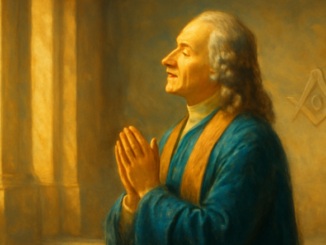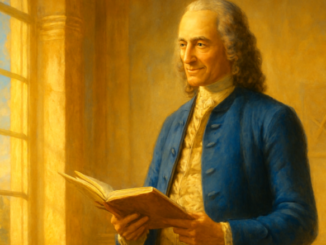
Portrait of Voltaire symbolizing Enlightenment tolerance and Freemasonry
Symbolism & Rituals

Voltaire on Tolerance: Philosophical Roots of a Virtue

Imagine you’re in a heated discussion with someone whose views are radically different from your own. You feel the urge to push back, to correct, perhaps even to condemn. But then something stops you: tolerance is not weakness — it’s a deliberate choice. François-Marie Arouet, better known as Voltaire, understood this better than most. His writings on tolerance drew from centuries of philosophical tradition. Which thinkers shaped his ideas? And how can their insights still guide us today? The Stoic Foundation: Seneca and Marcus Aurelius Voltaire was an avid reader of the Roman Stoics. Seneca, the philosopher and statesman, taught that anger and intolerance spring from flawed judgments about reality. When someone insults or contradicts you, it is not the other person who wounds you — it is your own interpretation of their words. This insight echoes powerfully through Voltaire’s case for tolerance: once we accept that people think differently because of their upbringing, culture, and experiences, the grounds for condemnation simply dissolve. Marcus Aurelius, the philosopher-emperor, took the idea even further. In his Meditations, he wrote that we should regard even our opponents as fellow human beings who act according to their own logic. Voltaire translated this into a […]

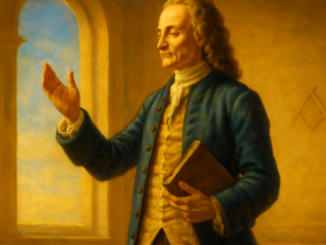
Voltaire writing his Treatise on Tolerance, symbolizing Masonic ideals
Symbolism & Rituals

Voltaire on Tolerance: The Calas Affair and Freemasonry

What drives a person to stand up against injustice when the rest of society looks the other way? In 1762, Jean Calas — a Protestant merchant from Toulouse — was sentenced to death on the strength of religious prejudice alone. Voltaire took up his pen and wrote his famous Treatise on Tolerance. But what does this eighteenth-century plea for humanity have to do with Freemasonry today? Far more than you might expect. What Actually Happened in the Calas Affair? Let’s start with the facts. Marc-Antoine Calas, Jean’s son, was found dead in the family home. In all likelihood, he had taken his own life. But a rumor spread quickly through Toulouse: that his father had murdered him to prevent his conversion to Catholicism. Without credible evidence, Jean Calas was tortured and broken on the wheel — a judicial murder driven by religious hysteria. Voltaire learned of the case and launched a years-long campaign for Calas’s posthumous rehabilitation. His Treatise on Tolerance is no dry legal argument. It is a passionate appeal for basic human decency. The question he posed remains just as relevant today: how can we call ourselves civilized while condemning our fellow human beings on the basis of […]

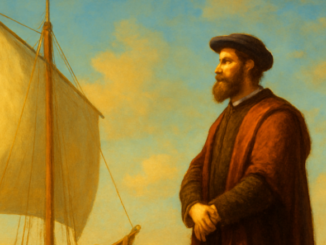
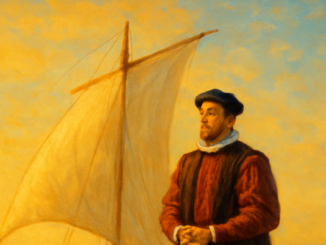
Portrait of Michel de Montaigne with philosophical and Masonic symbols
Michel de Montaigne – Philosophical Background

Montaigne on Customs: Philosophical Roots and Freemasonry

In 1580, Michel de Montaigne published a remarkable essay on the diversity of human customs. His observations on how different peoples perform the same acts in entirely different ways touched upon fundamental questions that had occupied thinkers for centuries. What philosophical traditions shaped his view of human diversity? And what can we — nearly five centuries later — still learn from his intellectual legacy, particularly as Freemasons? The Skeptical Tradition as Foundation Montaigne’s approach to human customs is deeply rooted in Pyrrhonian Skepticism, a philosophical school tracing back to the Greek thinker Pyrrho of Elis. This tradition held that absolute certainty about the world is unattainable and that we must suspend judgment. Montaigne immersed himself in the works of Sextus Empiricus, whose writings were being rediscovered and recirculated during his lifetime, and was profoundly influenced by his arguments against dogmatic thinking. In his essay on customs, Montaigne applies this skeptical stance consistently. He observes how what one culture considers civilized, another may regard as barbaric. Who, then, gets to determine what is truly right? By placing customs side by side without passing judgment, he invites the reader toward intellectual humility. This is not relativism — it is a call to […]