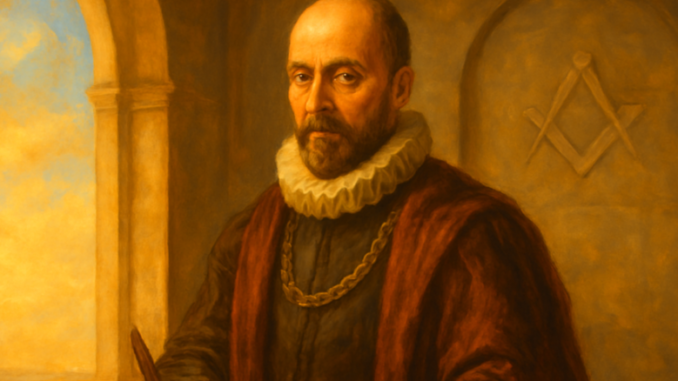
Have you ever considered what really happens when someone lies? Not just to the truth itself, but to the bond between people? In his ninth essay from the first book of his famous Essais, Michel de Montaigne tackles precisely this question. ‘On Liars’ is a compact yet powerful meditation on the nature of falsehood, the role of memory, and why sincerity forms the bedrock of every meaningful human relationship. Let’s explore the core of this timeless essay — and why it still matters, especially for those who value integrity and brotherhood.
The Starting Point: A Poor Memory
Montaigne opens his essay with a striking confession: he has an extraordinarily poor memory. This personal trait becomes the launching pad for his entire reflection on lying. He observes that people with weak memories are often suspected of being liars because they struggle to tell their stories consistently. Yet Montaigne turns this assumption on its head. Precisely because he knows his memory fails him, he has learned to always speak the truth. A liar, after all, needs an excellent memory to keep track of all his fabrications.
This insight feels remarkably modern. Montaigne demonstrates that honesty is not merely a moral choice — it is also a practical necessity. Anyone who lies creates a parallel reality that must be constantly maintained. The truth, by contrast, carries itself without effort or correction.
The Heart of the Lie: An Attack on Society Itself
Montaigne draws a distinction that remains vital today: the difference between saying something untrue and actually lying. You can be mistaken without being a liar. A lie only comes into existence when there is a deliberate intention to deceive. It is this intentional element that makes lying, in Montaigne’s view, a grave crime against the human community. Language, he argues, is the only instrument we have to share our thoughts and intentions with one another.
“If we fully realized the horror and gravity of the lie, we would pursue it with fire, and more justly so than other crimes.”
With this powerful statement, Montaigne underscores how fundamental truthfulness is to the functioning of any society. When words can no longer be trusted, the very foundation upon which we build our agreements, promises, and relationships crumbles. The lie is not merely a personal character flaw — it is an act of sabotage against the social fabric itself.
Lessons from the Ancient World
As was his custom, Montaigne draws freely from classical sources. He refers to the Persians, who reportedly taught their children three things: horsemanship, archery, and speaking the truth. Of these three, truthfulness was considered the most essential skill. He also invokes Plato, who argued that lying is a serious offence against the gods because it abuses the divine gift of language.
These historical examples serve not just as illustrations but as evidence that the rejection of falsehood is universal and timeless. Across vastly different cultures and philosophical traditions, the conclusion is the same: sincerity is not a luxury but a fundamental requirement for a dignified existence.
Memory, Identity, and Character
One of the most surprising elements of this essay is the connection Montaigne draws between memory and identity. Our memory forms the thread that holds together who we are. Without consistent recollections, we lose sight of ourselves. The habitual liar, by constantly creating new versions of reality, becomes entangled in a web that erodes his own sense of self. Eventually, he no longer knows what is true — or who he really is.
This insight touches on a deeper truth about personal growth. Self-knowledge demands honesty — not only toward others, but above all toward yourself. Montaigne suggests that the path to wisdom begins with the willingness to see yourself as you truly are, without embellishment or distortion.
Truth as a Building Block of Trust
In traditions that place great value on brotherhood and personal development — such as Freemasonry — the theme of sincerity plays a central role. The square, one of the most recognizable tools in Masonic symbolism, represents uprightness and the measuring of one’s own conduct against a straight standard. Just as a building can only stand firm when every stone is laid true, a community can only flourish when its members deal honestly with one another.
Montaigne’s argument aligns seamlessly with this principle. A lie is like a crooked stone in a foundation: it undermines the stability of the entire structure. Speaking the truth is therefore not simply an individual virtue but a contribution to the construction of a strong and cohesive community. For the Freemason, every honest word is a well-placed ashlar in the temple of human connection.
Why This Essay Still Matters
What makes this short essay worth reading more than four centuries after it was written? Montaigne does not write from an ivory tower. He writes from his own vulnerabilities. He freely admits that he does not possess a perfect memory — and it is precisely this shortcoming that leads him to choose truth. This honesty about himself makes his message both credible and accessible.
Consider the key insights he offers:
A weak memory can actually become a catalyst for sincerity. Intention is what separates an honest mistake from a lie. Truth is the foundation of every human community. And honesty toward yourself is the very basis of self-knowledge.
In an age when information is abundant and the line between fact and fiction sometimes blurs, Montaigne provides a clear compass. His essay reminds us that sincerity is not old-fashioned — it is the key to authentic connection and personal integrity. In a world of noise, the honest voice stands out not because it is the loudest, but because it is the most trustworthy.
Montaigne’s ‘On Liars’ is far more than a philosophical exercise. It is an invitation to reflect on the value of your own word. Every time you speak the truth, you lay a straight stone in the edifice of your character and your relationships. Perhaps that is the simplest — and at the same time the most difficult — task any of us will ever face. For those who walk the Masonic path, it is also among the most sacred: to build with integrity, one honest word at a time.
Copyright text & image: devrijmetselaar.nl
Texts are based on the ideas and content of the author of devrijmetselaar.nl, reviewed, corrected, and supplemented with the assistance of OpenAI. Images are created based on the ideas of the author of devrijmetselaar.nl using OpenAI/DALL-E.
Frequently Asked Questions
How does Montaigne's essay on truth relate to Freemasonry?
Montaigne's emphasis on truthfulness and integrity as the foundation of human relationships directly aligns with core Masonic values. Freemasonry has long upheld honesty and sincerity as essential virtues for building trust within the fraternity and society. The essay reinforces why Masons commit to living with integrity and upholding the truth in all their dealings.
Why do Freemasons value character and integrity so highly?
Just as Montaigne argues that language and honesty are the bedrock of society, Freemasons recognize that trust and truthfulness are essential to maintaining the bonds of brotherhood. Character development through moral principles is central to Masonic teaching, as it builds the foundation for meaningful relationships and strengthens the entire fraternal community.
What does Montaigne mean by saying a liar needs a good memory?
Montaigne observes that maintaining lies requires constant effort and a strong memory to keep fabrications consistent, whereas truth needs no such maintenance. This practical insight demonstrates that honesty is not only morally superior but also more sustainable—a principle Freemasonry embraces in teaching members that living truthfully creates a foundation of peace and authenticity.
How does Montaigne's view on lying connect to Masonic oaths?
Montaigne's assertion that lies undermine the social fabric directly supports the significance of Masonic oaths and obligations, which bind members to truthfulness and integrity. By swearing to uphold these principles, Masons commit to being trustworthy stewards of their word and protectors of the bonds that hold their fraternity together.



Be the first to comment