Racing circuit at Monza symbolizing ethical integrity and Freemasonry values
Philosophy & Ethics

Monza and Ethics: What a Singular Moment Teaches About Integrity

Imagine you are about to do something you know will never happen again. A chance that presents itself exactly once, in exactly this form, at exactly this moment. How do you act? What does your response reveal about who you truly are? The recent events at the legendary Monza circuit — where a driver created a historic moment and declared “this will never happen again” — invite a deeper reflection on ethics, integrity, and the art of seizing the unrepeatable. The Unrepeatable Moment as an Ethical Touchstone There is something fascinating about moments we recognize as truly unique. In motorsport, where technique, talent, and timing converge, such moments arise regularly. But the conscious awareness of it — the ability to articulate that something “will never happen again” — reflects a rare kind of clarity. It is precisely this clarity that lies at the heart of Freemasonry’s ethical approach. You may recognize this from your own life. A conversation you should have had but kept putting off. An opportunity you let slip because the timing didn’t seem perfect. Or perhaps a moment when you did act, when you were fully present, and only later realized how defining that choice was. The […]
Square and compass symbolizing truth and integrity in Freemasonry
Content & Summary

Montaigne on Liars: Truth as the Foundation of Character

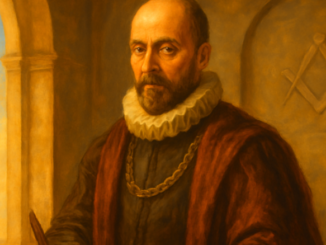
Have you ever considered what really happens when someone lies? Not just to the truth itself, but to the bond between people? In his ninth essay from the first book of his famous Essais, Michel de Montaigne tackles precisely this question. ‘On Liars’ is a compact yet powerful meditation on the nature of falsehood, the role of memory, and why sincerity forms the bedrock of every meaningful human relationship. Let’s explore the core of this timeless essay — and why it still matters, especially for those who value integrity and brotherhood. The Starting Point: A Poor Memory Montaigne opens his essay with a striking confession: he has an extraordinarily poor memory. This personal trait becomes the launching pad for his entire reflection on lying. He observes that people with weak memories are often suspected of being liars because they struggle to tell their stories consistently. Yet Montaigne turns this assumption on its head. Precisely because he knows his memory fails him, he has learned to always speak the truth. A liar, after all, needs an excellent memory to keep track of all his fabrications. This insight feels remarkably modern. Montaigne demonstrates that honesty is not merely a moral choice — […]