
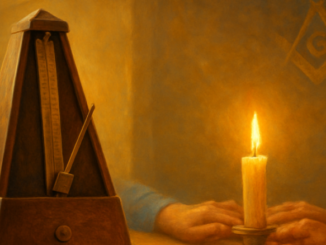
The candle flickers softly as a Brother opens the Volume of the Sacred Law. His fingers trace the pages until they rest on a passage he has read dozens of times before — yet tonight, the words seem to carry a different weight. “What does the Eternal require of you?” he reads aloud, and the question lingers in the stillness of the lodge room.
The Book of Micah, written by a prophet in the eighth-century Kingdom of Judah, poses a question that has echoed through millennia. What does it truly mean to live a good life? The answer Micah offers is deceptively simple and yet infinitely demanding: do justice, love faithfulness, and walk humbly. For anyone familiar with the traditions of Freemasonry, these words resonate like echoes of deeply familiar principles.
The Heart of Micah’s Message
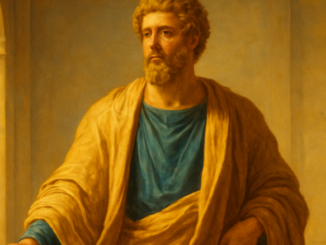
Micah prophesied during a time of profound social inequality. The wealthy enriched themselves at the expense of the poor, judges accepted bribes, and religious leaders sold their services to the highest bidder. Against this backdrop, the prophet raised his voice — not with elaborate theological arguments, but with a clear moral appeal. His most famous pronouncement appears in the sixth chapter: “He has told you, O man, what is good; and what does the Lord require of you but to do justice, and to love kindness, and to walk humbly?”
This threefold call forms the beating heart of the book. Micah does not speak of rituals or sacrifices, but of the daily practice of human coexistence. His words address the inner disposition of the individual and its concrete expression in our dealings with others.
Doing Justice: A Foundational Building Block
In Freemasonry, the concept of justice plays a central role. The square — one of the most recognizable working tools in the Craft — reminds the Brother to test his actions against what is right and fair. Just as Micah called upon his contemporaries to do justice for the vulnerable in society, the Freemason is invited to act justly in his daily life.
Justice here is not an abstract legal concept but a living practice. It means having the courage to speak when injustice occurs, maintaining honesty in business relationships, and treating every fellow human being with dignity. The rough ashlar that the Freemason symbolically works upon can only achieve its true form when the hands that shape it are guided by righteousness.
Faithfulness: The Cement of Brotherhood
The second element Micah names — “to love kindness” — refers to the Hebrew word chesed. This concept is notoriously difficult to translate, but it encompasses meanings such as loving-kindness, loyalty, covenant love, and steadfast faithfulness. It describes an attitude of enduring devotion to others, even when that devotion demands sacrifice.
Faithfulness is the cement that holds the stones of a building together — without it, even the most beautiful design will crumble.
Within Freemasonry, brotherhood is unthinkable without this kind of faithfulness. The bonds that connect Brethren are not based on fleeting sympathy but on a shared commitment to higher values. When a Brother finds himself in need, others stand by him — not merely out of duty, but out of genuine connection. This chesed, this faithfulness that Micah speaks of, is the invisible binding agent that transforms a community into something greater than a collection of individuals.
Walking Humbly: The Inner Journey
The third element — walking humbly — may reach the deepest of all. Micah uses a verb that implies movement: this is not a static virtue but a way of life in constant development. Humility is not weakness; it is the awareness that each of us is part of something far greater than ourselves.
The Freemason recognizes this in his own search for light. Initiation begins with the acknowledgment of ignorance and the willingness to learn. This attitude of modesty opens the door to genuine growth. Those who believe they already know everything close themselves off from new insight. Those who walk humbly remain receptive to the wisdom that others — and the world — have to offer.
From Ancient Text to Living Practice
What makes a text nearly three thousand years old still relevant today? The answer lies in the universality of Micah’s appeal. The prophet does not speak of specific religious prescriptions meant for a single community. He speaks of fundamental human values that transcend all boundaries.
Doing justice demands daily attention and courage. Loving faithfulness requires perseverance in relationships. Walking humbly invites continuous self-reflection.
Freemasonry, as a tradition that unites people from diverse backgrounds, finds a mirror in these ancient words. The working tools on the tracing board, the rituals in the lodge, the conversations between Brethren — all of these gain their fullest meaning only when connected to a living ethic. Micah’s threefold call can serve as a touchstone, an inner square by which the Brother measures his own conduct.
A Prophet for All Ages
It is striking that Micah, despite his sharp criticism of the injustices of his time, ultimately delivers a message of hope. He speaks of a future in which swords are beaten into plowshares and nations learn to wage war no more. This vision of peace is not passive — it requires the active contribution of every individual.
The Freemason who labors on the temple of humanity recognizes in this vision his own aspiration. It is not naïve idealism but a working hope that translates into concrete action. Every stone laid with care, every act that bears witness to justice and faithfulness, contributes to that greater edifice.
When the Brother closes the book and the candle is extinguished, Micah’s question continues to resonate — not as condemnation, but as invitation. Do justice, love faithfulness, walk humbly: these are not distant ideals etched in ancient stone, but living principles meant to be practiced every day. They are the moral architecture upon which both a meaningful life and a true brotherhood are built, stone by stone, act by act, one humble step at a time.
Copyright text & image: devrijmetselaar.nl
Texts are based on the ideas and content of the author of devrijmetselaar.nl, reviewed, corrected, and supplemented with the assistance of OpenAI. Images are created based on the ideas of the author of devrijmetselaar.nl using OpenAI/DALL-E.
Frequently Asked Questions
What is the connection between the Book of Micah and Freemasonry?
The Book of Micah's central message—to do justice, love faithfulness, and walk humbly—aligns deeply with Masonic principles and values. Freemasons view these three tenets as foundational to living a virtuous life and are regularly reminded of them through the working tools and teachings of the Craft.
How does Freemasonry interpret the concept of 'doing justice'?
In Freemasonry, justice is understood not as an abstract legal concept but as a living practice in daily life. Masons are encouraged to act justly by speaking against injustice, maintaining honesty in business, and treating all people with dignity—much like the prophet Micah called his contemporaries to do for the vulnerable in society.
What does 'loving faithfulness' mean in a Masonic context?
Faithfulness, or the Hebrew concept of 'chesed' (loving-kindness and steadfast devotion), is the bond that holds the Masonic brotherhood together. Without this commitment to enduring loyalty and support for one another, even the strongest fraternal bonds would crumble.
Why do Freemasons study ancient religious texts like the Book of Micah?
Freemasonry draws wisdom from many spiritual and philosophical traditions to guide Brothers toward moral improvement and virtuous living. The timeless ethical teachings found in texts like Micah reinforce the universal principles of justice, kindness, and humility that transcend any single faith or culture.


Be the first to comment