Open book with Masonic symbols representing Montaigne and Freemasonry wisdom
Freemasonry & Connection

Montaigne on Negotiation: Wisdom for Uncertain Hours

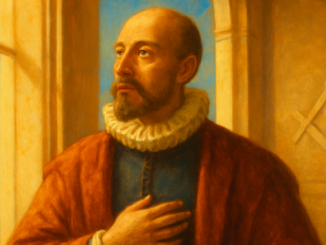
Imagine you are about to have a difficult conversation. Perhaps it involves a conflict, a business deal, or a personal matter that has been simmering for too long. You feel the tension, the uncertainty about the outcome, and somewhere beneath it all, the vulnerability of the moment. Michel de Montaigne, the sixteenth-century philosopher celebrated for his deeply personal essays, wrote about precisely these kinds of moments. In his essay ‘That the Hour of Negotiation Is Dangerous,’ he examines why the period of deliberation can be so perilous — and what it demands of our integrity. His insights connect in surprising ways to values that lie at the very heart of Freemasonry. The Vulnerable In-Between In this essay, Montaigne describes how the period of negotiation represents a uniquely dangerous phase. Not because conversations themselves are harmful, but because during this interim the usual rules seem temporarily suspended. Opposing parties come together under a flag of provisional peace. There is no agreement yet, but open hostility has ceased. Within that apparent calm lies the real danger: trust can be exploited, words can be twisted, and anyone who lets down their guard may pay a heavy price. Montaigne draws on historical examples of […]

Ancient fortress commander contemplating a difficult decision at the walls
Content & Summary

Montaigne on the Besieged Commander: Courage and Trust

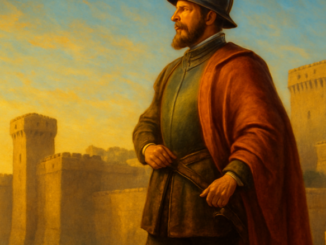
Imagine standing at the head of a fortress, surrounded by enemy troops. The walls are crumbling, supplies are dwindling, and your men look to you for guidance. What do you do? Negotiate? Fight to the bitter end? Seek an honorable way out? In his fifth essay from the first book, Michel de Montaigne examines exactly this dilemma — and in doing so, he offers surprisingly practical wisdom for anyone who has ever faced a difficult choice. The Central Question of the Essay Montaigne opens with a deceptively simple question: is it permissible for the commander of a besieged fortress to negotiate with the besieging enemy? In his era, this was a burning issue. The code of military honor demanded that a commander hold out to the last. But Montaigne, ever the clear-headed thinker, questions whether that rule is truly as absolute as it was claimed to be. At the heart of the essay lies the tension between rigid rules and practical judgment. Montaigne argues that circumstances determine what is fair and wise. A commander who negotiates from a position of weakness acts very differently from one who negotiates from strength and secures favorable terms. It is not the act itself […]