
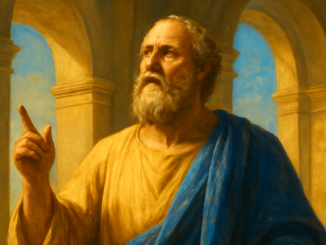
In the sixth essay of the first book of his Essays, Michel de Montaigne issues a warning that remains strikingly relevant today: it is precisely when parties appear to be reaching agreement that danger can be at its greatest. This short but powerful essay examines the human tendency to let our guard down the moment peace seems within reach. Centuries later, the question remains — what can we still learn from this penetrating observation, and how does it speak to those who pursue not only worldly wisdom but also inner development?
The Core Idea of the Essay
Montaigne opens with a clear thesis: the moments when enemies enter into negotiation are often the most dangerous of the entire conflict. His reasoning is as simple as it is unsettling. As soon as people believe that peace is near, their attention slackens. Weapons are set aside, guards are reduced, and trust increases. It is in precisely this vulnerable state that an adversary may strike. It is not open warfare that poses the greatest threat, but rather the twilight zone where hope and danger converge.
This insight extends far beyond the battlefield. Montaigne describes a universal human pattern: we tend to abandon our defenses when we feel safe. The philosopher asks whether this is an inherent weakness of our nature, or a tendency we can consciously correct.
Lessons from Antiquity
To illustrate his point, Montaigne draws liberally from classical history. He references sieges and battles in which negotiators were used as cover for surprise attacks. Cities that opened their gates to peace envoys were overrun by armies exploiting that trust. Generals who allowed their troops to rest during ceasefires were ambushed in their sleep.
These examples are not intended to preach cynicism. Rather, Montaigne shows how history repeatedly teaches the same lesson — and how reluctant we are to take it to heart. The human need for hope and trust consistently outweighs the caution that reason demands.
It is not the declared enemy who threatens us most, but the moments when we forget that enmity still exists.
Two Perspectives on Vigilance
How does an outsider view this theme, and how does someone devoted to inner development? The pragmatist sees primarily a strategic lesson: stay alert, never fully trust anyone, always keep an exit open. This is the reading of the soldier, the diplomat, the businessman who understands that interests collide.
But there is also a deeper reading. For those accustomed to self-reflection and symbolic thinking — those who walk a path of personal transformation — Montaigne speaks to an inner reality as well. The dangerous hours of negotiation are not only external. They play out equally within ourselves. When we believe an inner conflict has been resolved, when we think we have made peace with a shadow aspect of our character, that is precisely when that shadow can return unexpectedly. The vigilance Montaigne prescribes applies just as powerfully to the pursuit of self-knowledge.
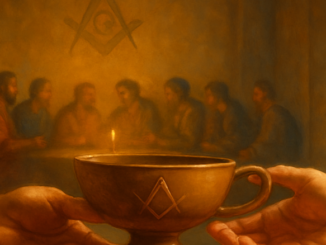
For the Freemason, this resonance is particularly strong. The Craft teaches that the work of self-improvement is never truly finished. The rough ashlar is shaped gradually, and the temptation to believe the work is done — to set down the working tools prematurely — mirrors exactly the danger Montaigne describes. True Masonic labor requires sustained awareness, not just during moments of challenge, but especially during moments of apparent calm.
What Both Perspectives Share
Despite their different starting points, both readings share a common core: the recognition that certainty is an illusion. Neither the warrior nor the seeker of self-knowledge can ever be entirely safe. Montaigne does not teach us to become distrustful, but to remain conscious. The attentiveness he advocates is not born of fear — it is a form of wisdom.
Several principles emerge from this shared understanding:
Vigilance is not distrust, but awareness. Hope and caution can coexist. Self-knowledge demands ongoing attention, even after apparent peace has been achieved. History repeats itself for those who fail to study it.
These are not abstract ideas. They are practical guidelines for anyone engaged in the work of building character and navigating human relationships with integrity.
The Lasting Relevance of This Essay
What makes this brief essay still worth reading after more than four centuries? Montaigne touches on a universal truth about the human condition. We are creatures of hope and trust, and those qualities are precious. But they can also become our blind spots. The art lies in preserving both: the capacity for trust and the capacity for vigilance.
In an age when negotiations take place at every level — from international diplomacy to personal relationships, from the boardroom to the lodge room — Montaigne’s observation remains urgent. The question is not whether we should trust others, but whether we pay sufficient attention to the moments when our trust makes us vulnerable. This is not a call to cynicism, but to a more mature understanding of the complexity of human relations.
Lessons for the Modern Reader
Montaigne invites us to look critically at ourselves. When do we let our guard down? In what situations are we inclined to trust too quickly? And more importantly: what does this reveal about our deeper longings? Perhaps the urge to lay down our weapons is not merely a weakness, but also an expression of our profound desire for connection and peace. The essay asks us to acknowledge both aspects without sacrificing one for the other.
For those on a Masonic path, these questions carry particular weight. The Lodge is a place of trust and brotherhood, yet the lessons of the degrees consistently remind us that discernment is essential. The candidate is tested not in moments of obvious danger, but in moments of transition — those liminal spaces where old certainties dissolve and new understanding has not yet solidified. These are the dangerous hours of negotiation that Montaigne so vividly describes.
Michel de Montaigne offers no easy answers in this essay, but he does offer a mirror. The dangerous hours of negotiation are everywhere: in the world around us and within our own minds. Those who take this insight seriously learn not to be perpetually on guard, but to choose consciously when trust is appropriate. That may be the true wisdom this ancient essay still has to give us — the art of remaining vigilant without losing the capacity for trust. It is a balance that every thoughtful person, and every Freemason, must strive to maintain throughout the journey of life.
Copyright text & image: devrijmetselaar.nl
Texts are based on the ideas and content of the author of devrijmetselaar.nl, reviewed, corrected, and supplemented with the assistance of OpenAI. Images are created based on the ideas of the author of devrijmetselaar.nl using OpenAI/DALL-E.
Frequently Asked Questions
How does Montaigne's essay relate to Freemasonry and personal development?
Montaigne's warning about dangerous moments of negotiation speaks directly to the Masonic pursuit of self-knowledge and inner development. Freemasonry teaches that true vigilance extends beyond external affairs to our inner work, helping us recognize when we believe conflicts are resolved but must remain alert to deeper truths about ourselves. This aligns with the Masonic principle of continuous self-examination and the careful, deliberate progress through degrees of understanding.
What can Freemasons learn from the concept of 'dangerous hours'?
Freemasons learn that wisdom requires maintaining thoughtful awareness even—or especially—during moments of apparent peace and agreement. This teaching complements Masonic values of prudence and careful reflection, reminding us that genuine progress in both outer dealings and inner transformation demands sustained attention rather than complacency. The lesson encourages Masons to approach their work with balanced discernment.
How does this essay apply to resolving inner conflicts, as Freemasonry teaches?
Just as Montaigne warns against lowering our guard when external enemies seem pacified, Freemasonry teaches that resolving inner conflicts requires ongoing vigilance and self-awareness. When we believe we have made peace with a weakness or shadow aspect of ourselves, that is often when deeper work becomes necessary. This parallels the Masonic journey of progressive illumination, where each apparent resolution opens new levels of understanding.
Why is Montaigne's wisdom still relevant to modern Freemasons?
Montaigne's insight about human nature transcends time because it addresses fundamental truths about consciousness and self-deception that Freemasonry also seeks to illuminate. Whether navigating worldly affairs or pursuing spiritual development, Masons benefit from understanding how hope and complacency can cloud our judgment. This ancient wisdom supports the Masonic commitment to building character through honest self-assessment and sustained effort.


Be the first to comment