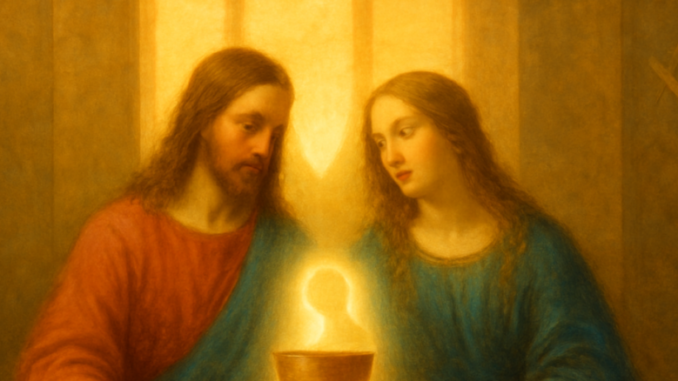
You probably know the image well: a chalice shrouded in mystery, the object of centuries-long quests. But what if the Holy Grail isn’t a cup at all? In his worldwide bestseller The Da Vinci Code, Dan Brown presents a radically different reading of this symbol — one that places Mary Magdalene at its very center. What exactly does the book claim, and how can seekers of truth approach these ideas in a meaningful, practical way?
The Central Claim of the Book
The Da Vinci Code, written by Dan Brown and published in 2003, revolves around a spectacular thesis: the Holy Grail is not a physical cup said to have caught the blood of Christ, but a metaphor for Mary Magdalene herself. According to the narrative Brown presents, she was not merely a follower of Jesus but his wife and the bearer of his bloodline. The Grail, then, refers to the lineage continued through her.
Brown weaves this claim through his plot by way of a secret society that has allegedly guarded this truth for centuries. He points to the works of Leonardo da Vinci — most notably The Last Supper — arguing that the figure seated next to Jesus is not the apostle John, but Mary Magdalene. Her presence in the painting, according to the book, is a coded message hidden in plain sight.
The Chalice Symbol Reinterpreted
The traditional image of the Grail as a drinking vessel has deep roots in medieval literature and Christian iconography. Dan Brown turns this on its head: the V-shape we associate with a chalice is, he suggests, actually the symbol of the feminine — of the womb. The Holy Grail thus becomes a symbol for the sacred feminine principle, which, according to the thesis in The Da Vinci Code, was systematically suppressed by the Church.
For anyone accustomed to examining symbols, this raises questions that reach far beyond the factual accuracy of Brown’s claims. The deeper question is: how do we read symbols? Do we accept them as they have been handed down to us, or do we dare to question them and examine them from fresh perspectives?
Practical Lessons for Symbolic Seekers
Whether or not you believe the historical claims of The Da Vinci Code, the book offers a valuable exercise: it confronts readers with the possibility that symbols can carry multiple layers of meaning. This is hardly a new insight for those familiar with Freemasonry, where symbols such as the square, the compasses, and the rough ashlar are deliberately left open to personal interpretation.
A symbol is not an answer — it is an invitation to think, a key that fits multiple doors at once.
So what can you do with this, practically? The next time you encounter a familiar symbol, ask yourself three questions:
1. What is the conventional meaning I was taught?
2. What other interpretations become possible if I change the context?
3. What does my own inner reaction to this symbol tell me?
The Danger and the Power of Reinterpretation
The Da Vinci Code inspired millions of readers to think about hidden histories. At the same time, historians and theologians have extensively criticized Dan Brown’s factual claims as inaccurate or unfounded. This tension is instructive in itself: it shows how powerful narratives can be, and how important it is to distinguish between fiction, hypothesis, and established history.
A similar tension exists within Freemasonry. The rituals and symbols reference master builders and temples from a distant past, but historical accuracy is not the point. What matters is the moral and spiritual truth conveyed through the story. A rough ashlar doesn’t need to literally come from a quarry to remind you of your own unfinished character.
Mary Magdalene as Mirror
Regardless of what you think of the thesis in The Da Vinci Code, the book invites reflection on how we relate to figures from history. Mary Magdalene has been portrayed in many ways across the centuries: as sinner, as saint, as initiate, as beloved. Each generation projects its own values and questions onto her story.
This will feel familiar to anyone who takes symbolic work seriously. The figures and narratives we work with ultimately reveal as much about ourselves as they do about tradition. The question is not only who Mary Magdalene was, but who you become when you contemplate her story.
Concrete Steps for Deeper Exploration
If you want to engage personally with the themes The Da Vinci Code touches upon, here are three practical suggestions:
First, study Leonardo da Vinci’s The Last Supper and pay attention to details you may have overlooked before. What do you see differently now?
Second, read a historically rigorous work about Mary Magdalene alongside Dan Brown’s novel. Compare the two approaches and notice where they diverge — and where, surprisingly, they might converge.
Third, choose a symbol from your own practice and apply the three questions mentioned earlier. Write down your findings. The act of putting your reflections into words often reveals layers of meaning you hadn’t consciously recognized.
By placing fiction and history side by side, you practice a skill that is indispensable in any search for truth: the ability to discern without condemning, and to keep asking questions without forcing definitive answers.
Dan Brown’s The Da Vinci Code gave the Holy Grail a new face — whether you appreciate that or criticize it. The claim that Mary Magdalene herself is the Grail challenges us not to accept symbols at face value. For everyone seeking deeper meaning, this offers a concrete lesson: a symbol only truly comes alive when you dare to question it. That courage to inquire is ultimately more valuable than any definitive answer could ever be.
Copyright text & image: devrijmetselaar.nl
Texts are based on the ideas and content of the author of devrijmetselaar.nl, reviewed, corrected, and supplemented with the assistance of OpenAI. Images are created based on the ideas of the author of devrijmetselaar.nl using OpenAI/DALL-E.
Frequently Asked Questions
What is Dan Brown's central claim about the Holy Grail in The Da Vinci Code?
Dan Brown argues that the Holy Grail is not a physical cup, but a metaphor for Mary Magdalene herself. According to the book's narrative, Mary Magdalene was Jesus's wife and bore his bloodline, and the Holy Grail refers to this lineage that was allegedly guarded by a secret society for centuries.
How does Dan Brown use Leonardo da Vinci's artwork as evidence for his theory?
Brown points to Leonardo da Vinci's The Last Supper as coded evidence, arguing that the figure seated next to Jesus is not the apostle John, but Mary Magdalene. He suggests her presence in the painting is a deliberate hidden message from da Vinci, which supports the theory that this truth was known and guarded by certain groups.
What is the symbolic significance of reinterpreting the chalice as a representation of the sacred feminine?
Brown reinterprets the V-shape of a chalice as a symbol of the feminine and the womb, transforming the Holy Grail into a symbol of the sacred feminine principle. This reinterpretation raises broader questions about how we interpret symbols and suggests that the Church systematically suppressed the divine feminine, a concept that resonates with Masonic traditions of multiple symbol interpretation.


Be the first to comment