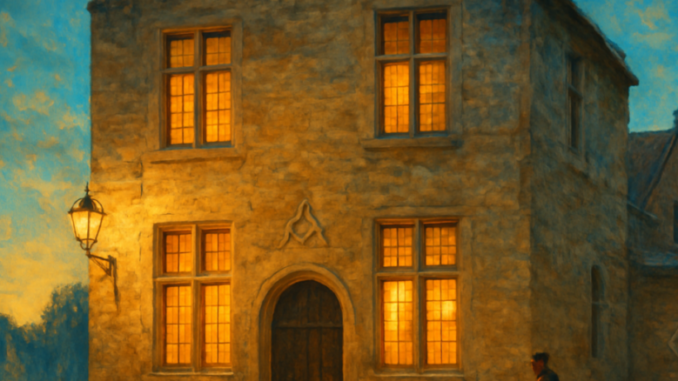
What drives people to join a community that has existed for centuries? Freemasons in Den Bosch form a remarkable link in a chain that stretches back to the Middle Ages. But what does brotherhood actually mean in an age where individualism seems to be the default? Let’s explore these questions together — as if we were sitting at a table in one of the historic buildings of this Brabant capital.
Why Do We Speak of Brotherhood?
The word brotherhood conjures up different images for different people. Some think of family, others of a secretive society. But in Freemasonry, the word carries a deeper meaning. It’s not about blood ties or exclusivity — it’s about a shared quest for meaning and self-improvement.
Imagine walking into a room where background, profession, and social status are irrelevant. Where a lawyer sits beside a carpenter, a doctor next to an artist. What binds them is not what they have, but who they aspire to become. That is the essence of brotherhood as Freemasons understand it.
Freemasons in Den Bosch: A History of Connection
Den Bosch has a rich Masonic history. The city, with its medieval character and deep cultural traditions, has always provided fertile ground for communities that value contemplation and ritual. As early as the eighteenth century, men gathered here in search of a different way of living together — one that transcended the rigid class structures of their time.
Why this city in particular? Den Bosch sat at a crossroads of trade routes and ideas. Merchants, craftsmen, and scholars met within its walls. In that dynamic environment, new forms of connection emerged — forms that reached beyond the conventional social boundaries of the day.
The Lodge as a Workshop for the Soul
A Masonic lodge is not a clubhouse in the ordinary sense. It is a workshop — an atelier where it is not stone or wood that is shaped, but the inner life of the individual. The lodges of Den Bosch operate according to traditions that have been handed down for generations. Rituals, symbols, and open dialogue serve as the tools with which brothers work on themselves.
The true Mason does not build walls, but bridges between people.
What Makes Brotherhood Different from Friendship?
It’s a fair question. Friendship often arises spontaneously — through shared interests or chance encounters. Brotherhood in the Masonic sense asks more. It is a conscious choice to commit yourself to others, even those you have not yet come to know. It is a promise to search together, to doubt together, and to grow together.
In the lodges of Den Bosch, men of different ages and backgrounds come together. They don’t necessarily share the same views on social or political issues. What they do share is a willingness to listen — to recognise the other as a fellow seeker on the path of self-knowledge.
The Power of Ritual
Rituals are sometimes dismissed as dusty relics of the past. But consider this: why do we still celebrate birthdays? Why do we shake hands when we meet? Rituals give shape to what would otherwise remain intangible. In Freemasonry, they serve as anchors for reflection and connection.
During a gathering in Den Bosch, brothers participate in symbolic acts that have been practised for centuries. These rituals are not theatre — they are moments of contemplation. They remind participants that they are part of something greater than themselves.
Freemasonry in Den Bosch: Open or Closed?
This is one of the most frequently asked questions. Freemasonry is not a secret society, but rather a society with certain traditions that are not shared publicly. That may sound paradoxical, but think of a meaningful conversation with a trusted friend. Some words only gain their full significance in the right context, spoken at the right moment.
The lodges in this Brabant capital welcome men who are genuinely interested in personal growth and the search for meaning. There is no mysterious selection process or impossible threshold. What is asked is sincerity and a willingness to question yourself. Key qualities include:
- A belief in something greater than yourself, free from dogma
- Respect for those who think differently
- A desire to work on your own development
- A willingness to honour confidentiality
What Can Brotherhood Mean in Our Time?
We live in an era of digital connections and physical distance. Social media promises community but often delivers superficiality. In this context, the need for authentic connection grows ever more urgent. What does it truly mean to be seen by another person?
Masonic brotherhood doesn’t offer ready-made answers. What it offers is a space where questions may be asked without rushing toward solutions. Where silence doesn’t need to be filled with noise. Where men meet each other not in spite of their differences, but precisely because of the richness that diversity brings.
In Den Bosch — a city where past and present meet in narrow streets and monumental churches — that search feels especially fitting. The Freemasons who gather here are heirs to a tradition that has endured for generations. At the same time, they are seekers of this very moment, carrying questions that are urgent for today.
Brotherhood is never a given. It demands commitment — the willingness to make yourself vulnerable before others who walk the same path. Freemasons in Den Bosch know that building connection is not a one-time act but a lifelong endeavour. The question remains: are you ready to help build?
Copyright text & image: devrijmetselaar.nl
Texts are based on the ideas and content of the author of devrijmetselaar.nl, reviewed, corrected, and supplemented with the assistance of OpenAI. Images are created based on the ideas of the author of devrijmetselaar.nl using OpenAI/DALL-E.
Frequently Asked Questions
What is the main purpose of joining a Masonic lodge in Den Bosch?
The primary purpose is personal growth and self-improvement through shared contemplation and dialogue with others who seek meaning and self-knowledge. Members are united not by blood ties or social status, but by a common aspiration to become better versions of themselves. The lodge serves as a workshop for the soul, where rituals, symbols, and open conversation help brothers develop spiritually and intellectually.
How is Masonic brotherhood different from regular friendship?
Masonic brotherhood is a conscious commitment to connect with others and grow together, whereas friendship often develops spontaneously through shared interests. In the lodges of Den Bosch, men from different backgrounds and professions deliberately choose to listen to and learn from one another, even if they don't share the same social or political views. This creates a deeper bond based on mutual respect and the shared journey of self-discovery.
Why has Freemasonry thrived in Den Bosch specifically?
Den Bosch's medieval character, cultural traditions, and position as a crossroads of trade routes made it an ideal location for communities valuing contemplation and connection. As early as the eighteenth century, the city attracted merchants, craftsmen, and scholars who sought new forms of social connection that transcended the rigid class structures of their time. This dynamic environment fostered the emergence of Masonic lodges that continue to flourish today.
What role do rituals play in Freemasonry?
Rituals are meaningful tools that help shape the inner life and spiritual development of Masons, not outdated relics of the past. They provide structure and depth to the lodge experience, helping members reflect on their journey of self-knowledge and growth. Like everyday rituals such as celebrating birthdays or shaking hands, Masonic rituals mark important moments and reinforce the bonds of brotherhood among members.

Be the first to comment