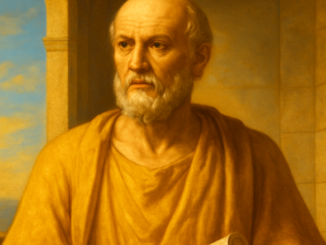
Seneca’s Letter XXVI: Philosophical Roots of Death and Life
An old man sits at his writing desk, the oil lamp casting dancing shadows across rolls of parchment. Outside, evening descends over Rome, but Lucius Annaeus Seneca barely notices. He is writing to his friend Lucilius about something that has occupied his mind for years: the approach of death and the art of truly living. In this twenty-sixth letter, a rich philosophical tapestry unfolds — woven from threads of Stoicism, Epicureanism, and ancient Greek wisdom. What thinkers and traditions shaped Seneca’s reflections on the ultimate transition, and why do they still matter to Freemasons today? The Stoic Foundation: Living in Accordance with Nature Seneca’s thinking about death and life is deeply rooted in Stoic philosophy, a school founded by Zeno of Citium around 300 BCE. The Stoics taught that death is not an evil but a natural part of the cosmic process. Chrysippus, one of the great systematizers of early Stoicism, developed the concept of the logos — the rational order that permeates the universe. For Seneca, this means that death need not be feared, because it is part of the very same logos that makes life possible. In Letter XXVI, Seneca applies this teaching to his own aging. He […]