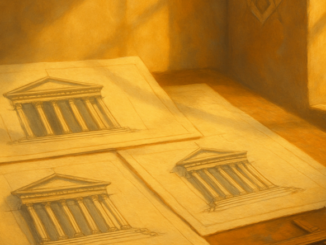
Three symbolic Masonic temples representing history, humanity, and inner growth
Symbolism & Rituals

Three Temples, One Journey: What’s the Difference?

When Freemasons speak of “the temple,” they rarely mean the same thing. One refers to a biblical structure erected thousands of years ago. Another speaks of a collective ideal that encompasses all of humanity. And yet another points inward, toward something only he can build. Three temples, three perspectives — and yet they seem inseparably linked. So what exactly is the difference? And more importantly, what does that difference tell us about the journey every seeker undertakes? Solomon’s Temple: The Historical Foundation The first temple at the heart of Masonic symbolism is Solomon’s Temple. According to biblical tradition, this structure was built in tenth-century Jerusalem, and it serves as the backdrop against which the ritual work of Freemasonry unfolds. Here, stonemasons, architects, and craftsmen worked together on something greater than themselves. Solomon’s Temple represents the external, the visible, the tangible result of human cooperation. For those outside the Craft, this temple is often the most recognizable symbol. It is a story of stone, cedarwood, and gold — of King Solomon who sought wisdom and the master builder Hiram who applied his skill. From this perspective, the temple is treated as a historical given, a place that once existed and now […]
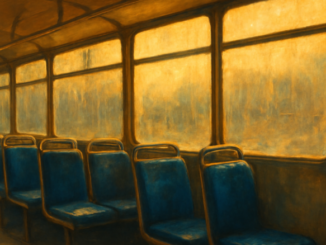

City bus passengers symbolizing shared community trust and vulnerability
Freemasonry & Society

Building Safety Together: A Masonic Reflection on Trust

It’s early morning. On a city bus in Rotterdam, people sit side by side: a mother with her child, a student wearing headphones, an elderly man carrying groceries. They share the same space, the same journey, the same vulnerability. Then shots ring out. Today’s news confronts us with a question Freemasons have been asking for centuries: how do we build a world in which strangers can trust one another? The Bus as a Mirror of Society A city bus is more than a means of transportation. It is one of the few remaining places where every layer of society literally sits side by side. Rich and poor, young and old, people from vastly different backgrounds and life stories. No one chooses their fellow passengers, yet everyone shares a common destination. This forced proximity makes the bus a powerful symbol of what society truly is: a collection of individuals who depend on each other’s goodwill. When violence invades that shared space, it doesn’t only harm those directly involved. It shakes the very foundation of communal life — the basic trust that we can be safe among strangers. For Freemasons, this trust is never taken for granted. It is a structure that […]

Masonic rough ashlar stone symbolizing the search for understanding and peace
Freemasonry & Society

The Message as Weapon: Conflict and the Search for Understanding

A plane crashes in the jungle. A life ends far from home. A message echoes across borders — designed to shock, to warn, to force the world to listen. When violence becomes a means of communication, society faces a fundamental question: how do we respond to messages written in blood? This is not a question reserved for diplomats and strategists. It strikes at the very heart of what it means to be human in a world of broken connections. The Airplane as a Symbol of Connection An airplane is more than a mode of transport. Symbolically, it represents the deeply human urge to bridge distances, to connect what has been separated. The pilot at the controls embodies the role of a connector between worlds that might otherwise never touch. When such a plane is brought down, it is not merely a machine that is destroyed — a symbol is struck. In Freemasonry, connection plays a central role. The lodge is, by its very nature, a place where people of different backgrounds, professions, and convictions come together. Not despite their differences, but precisely because those differences offer valuable perspectives. The Mason builds bridges, not walls. He seeks what unites people, not […]