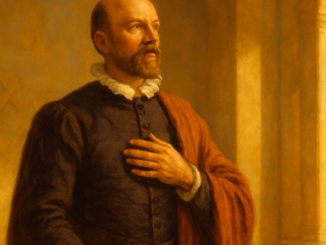
Ancient Roman simplicity symbolizing Masonic values of temperance and brotherhood
Michel de Montaigne – Freemasonry & Connection

Montaigne on Simplicity and Brotherhood in the Lodge

Imagine sitting at a lavishly set table — silverware gleaming, crystal catching the light — and yet sensing that something essential is missing. Not in the food, not in the company, but in the way everything feels so effortlessly excessive. That quiet unease is exactly what Michel de Montaigne captures in his brief but piercing essay “On the Frugality of the Ancients.” Looking back at the simplicity of the Roman Republic, he asks what was lost when abundance became the default. It is a question that strikes remarkably close to the heart of Freemasonry, where inner richness and genuine connection matter far more than outward display. The Simplicity Montaigne Admired In Essay 52 of the first book of his famous Essays, Montaigne keeps things unusually short. That alone is telling for a writer who elsewhere devotes dozens of pages to a single subject. He turns his attention to the Roman generals and senators who, after triumphant campaigns, returned to their farms, ate from earthenware, and sought their wealth not in possessions but in character. He invokes figures like Cato the Elder and Gaius Fabricius Luscinus — men who commanded vast armies yet tilled their own soil with their own hands. […]
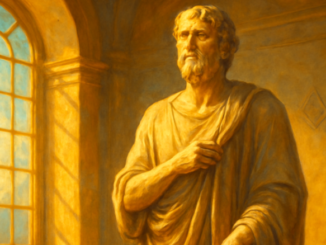
Masonic level and temple symbolizing balance between body and spirit
Lucius Annaeus Seneca – Freemasonry & Connection

Seneca’s Letter XIV: The Body as a Workshop for the Spirit

A candle flickers in the early morning light. A Freemason stands before his mirror — not out of vanity, but out of habit. He studies his face, feels the weariness of a short night, and wonders: how much attention does this body actually deserve? Nearly two thousand years ago, Lucius Annaeus Seneca posed precisely this question to his friend Lucilius. The answer he gave touches, with surprising directness, on something brothers in the lodge have always sought: the right balance between the material and the spiritual. The Paradox of Bodily Care In his fourteenth letter, Seneca confronts us with an apparent contradiction. On the one hand, we must not neglect the body, for it carries the spirit. On the other, we must not become enslaved to it, for then the servant becomes the master. Seneca writes with his characteristic sobriety: we should treat the body as an instrument, not as an idol. It deserves maintenance, not worship. This idea was far less self-evident in the Roman world than it might seem today. Gladiatorial games, bathhouse culture, and culinary excess defined the streetscape. Seneca did not oppose bodily pleasure in itself, but rather its tyranny. When the body dictates what the […]