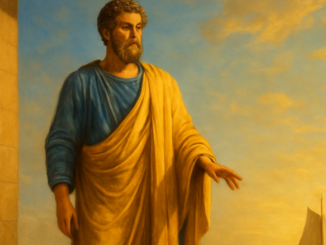
Marcus Aurelius and the Stoic God: Philosophical Roots
When Marcus Aurelius writes about the divine in the twelfth book of his Meditations, he draws on a philosophical tradition that stretches back five centuries before his time. His reflections on the cosmos as an ensouled whole, on the logos that pervades all things, are far more than private musings. They represent the culmination of a long chain of thinkers who grappled with the same fundamental question: what is the nature of the divine, and how does the human being relate to it? To truly understand his thought, we must return to the sources from which he drank. The Legacy of Heraclitus Stoic theology does not begin with the Stoics themselves, but with a solitary thinker from Ephesus who lived around 500 BCE: Heraclitus. This enigmatic philosopher introduced the concept of the logos as a cosmic ordering principle. For Heraclitus, reality was not chaos but an ongoing dance of opposites, held together by a divine reason he compared to an ever-living fire. When Marcus Aurelius writes of the fiery breath that pervades the universe, he echoes this ancient intuition. Heraclitus did not see change as a threat but as the very essence of reality. Everything flows; nothing remains. Yet within […]