Symbolic representation of the 33rd degree in Scottish Rite Freemasonry
Personal Development & Leadership

The 33rd Degree and Personality: A Masonic Exploration

The 33rd degree fascinates people — even those who know very little about Freemasonry. But what does this highest point in the Scottish Rite actually mean for a person’s character and inner life? Is it a crowning achievement of intellect, of moral fiber, or of something else entirely? Let’s explore this together, as though sitting across a table, asking questions and searching for answers. Why Does the 33rd Degree Capture the Imagination? Why has this particular number taken on such a mystical charge? Within the Ancient and Accepted Scottish Rite, the 33rd degree is the highest level a Freemason can attain. It is not a degree you apply for or campaign to receive. It is conferred upon those who have rendered extraordinary service to the Order, to society, or to both. But there is a subtlety here that is often overlooked. This is not about status in the conventional sense. Albert Pike, the nineteenth-century reformer of the Scottish Rite in America, emphasized that the degrees do not form a ladder of power. They represent, instead, a deepening of understanding. Each degree offers a new perspective — a different lens through which the Mason can examine himself and the world around […]
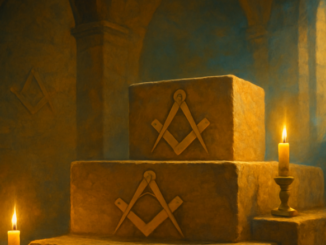
Symbolic representation of the three degrees of Freemasonry with Masonic tools
Freemasonry & Society

The Degrees in Freemasonry Explained: A Complete Guide

The degrees in Freemasonry form the backbone of the entire fraternity. They are far more than titles or ranks — they represent stages of personal growth, ethical deepening, and brotherly connection. Understanding the degree system is the key to unlocking the symbolism, rituals, and philosophy that define this centuries-old brotherhood. This article offers a comprehensive yet accessible overview of Masonic degrees, from the first step as an Apprentice to the highest levels found within the various rites. The Historical Background of the Degree System To truly understand the degrees in Freemasonry, it helps to look at the historical roots of the fraternity. Modern Freemasonry as we know it developed in early eighteenth-century Britain. On June 24, 1717, the first Grand Lodge was founded in London — a milestone that ushered in the era of modern, speculative Freemasonry. The four lodges that united on that occasion initially worked with a simple two-degree system: the Entered Apprentice and the Fellow Craft. It was only shortly afterward, around 1725, that the third degree — that of Master Mason — was added to the system. The origins of this degree structure lie in the medieval stonemason guilds, often referred to as operative Freemasonry. The […]

Symbolic staircase representing the 33 degrees of Freemasonry and brotherhood
Personal Development & Leadership

The 33rd Degree: Where Brotherhood Becomes a Paradox

The 33rd degree fascinates and confounds in equal measure. How can a brotherhood that preaches equality simultaneously maintain a system of thirty-three ascending steps? It’s a question that occupies outsiders and initiates alike — and perhaps that is exactly the point. Because within this tension between hierarchy and equality lies a deeper insight into what human connection truly means. The Paradox of the 33rd Degree Explained Let’s begin with a provocative proposition: the highest degrees of Freemasonry exist not to elevate people, but to make them smaller. Not in the sense of humiliation, but in the original meaning of the word humilitas — derived from humus, the earth. The higher one climbs on the symbolic ladder, the sharper the awareness of one’s own limitations becomes. The thirty-third step is not a throne but a vantage point from which the horizon remains infinite. This may sound like a contradiction. We live in an age in which hierarchy has become suspect, in which every form of rank is automatically associated with power and oppression. Yet the structure of degrees within Masonic traditions operates in a fundamentally different way. It is not a ladder upward, but a spiral inward. Each degree reveals not […]

Symbolic representation of the 33rd degree in Scottish Rite Freemasonry
Spiritual Traditions

The 33rd Degree: Spiritual Growth in Everyday Practice

Few things in Freemasonry spark as much curiosity as the 33rd degree. Some see it as the ultimate secret, others as a mystical status reserved for a chosen few. But what if this highest step of the Scottish Rite is not merely a ceremonial pinnacle — but an invitation to make spiritual growth tangible in your everyday life? In this article, we explore how the principles behind this degree can help you become a better version of yourself, starting today. Why the 33rd Degree Captures the Imagination The 33rd degree is the highest degree within the Scottish Rite, one of the most prominent branches of Freemasonry. The number thirty-three carries a special resonance — it evokes ideas of life stages, symbolic completion, and timeless wisdom. Yet contrary to what movies and conspiracy theories might suggest, this degree has nothing to do with secret power or hidden knowledge. It is about service, wisdom, and a willingness to help others grow. In practice, the 33rd degree is conferred upon Freemasons who have dedicated years of effort to their brethren and their community. It is not a reward earned through examinations or tests. It is recognition of a way of life. And that […]

Symbolic representation of the 33rd degree in Scottish Rite Freemasonry
Philosophy & Ethics

The 33rd Degree: Wisdom or Mystery?

Few numbers capture the imagination of those curious about Freemasonry quite like the number 33. It surfaces in conversations about the Craft, often shrouded in speculation and fascination. But what truly lies behind this thirty-third step on the ladder of Masonic knowledge? Let’s explore the philosophy behind the degrees, their meaning, and the deeper question of whether wisdom can ever be contained in a number. What Is the 33rd Degree, Really? Let’s start with the basics. Within the Scottish Rite — one of several appendant bodies in Freemasonry — there are thirty-three degrees. The first three are the so-called Blue Lodge degrees: Entered Apprentice, Fellow Craft, and Master Mason. Beyond these lie thirty additional degrees, with the thirty-third serving as the capstone. But does holding this degree automatically mean someone is wiser or more knowledgeable? The answer is more nuanced than you might expect. The 33rd degree is not an academic credential, nor is it proof of superiority. It is, above all, a recognition of years of dedication to the principles of brotherhood, self-improvement, and service to the community. The number itself carries symbolic weight, but the true value lies in the journey that leads to it. Why Thirty-Three? This […]

Historic Masonic lodge interior representing 19th century Freemasonry
History

The History of Freemasonry in the 19th Century

The 19th century was an era of sweeping transformation. The Industrial Revolution, the rise of nation-states, and the march toward democracy reshaped the world as we know it. Throughout this turbulent period, Freemasonry played a significant role as a community of ideas, social reform, and international cooperation. Freemasonry and the Industrial Revolution As industrialization took hold across Europe and North America, new social classes emerged and the demand for social justice grew louder. Many Masonic lodges found themselves at the forefront of initiatives that championed social reform. Members leveraged their networks to advocate for improved working conditions, expanded access to education, and the establishment of charitable institutions. It was also during this period that women first began to gain a foothold in Freemasonry, albeit often through so-called “adoptive lodges” that operated under the supervision of male Grand Lodges. While inclusivity was slowly increasing, most lodges remained closed to women — a tension that would continue well into the following century. Political Involvement and National Movements The 19th century also witnessed a growing political influence of Freemasonry. In countries like France and Italy, lodges were closely involved in the struggle for national unification and the promotion of republican ideals. Prominent Freemasons […]

Symbolic representation of the 33rd Degree in Scottish Rite Freemasonry
Symbolism & Rituals

The Truth Behind the 33rd Degree in Freemasonry

Few topics in Freemasonry generate as much curiosity and speculation as the 33rd Degree. For outsiders, it often conjures images of secretive power, exclusive hidden knowledge, or a shadowy elite pulling strings behind closed doors. These narratives, however, are far removed from reality. Let’s separate the facts from the fiction and explore what the 33rd Degree truly represents. What Is the 33rd Degree? The 33rd Degree belongs to the Scottish Rite, a supplementary system of degrees within Freemasonry. Contrary to popular belief, it is not a rank that one achieves by passing through a series of rituals or examinations. Instead, it is an honorary degree — a recognition bestowed upon Brethren who have demonstrated exceptional dedication to the Order and to their communities. Think of it as a tribute to service and commitment, rather than a step on a ladder of power. No Power, No Conspiracy One of the most persistent misconceptions about the 33rd Degree is that it confers some kind of authority or influence, either within Freemasonry or in the wider world. In reality, Freemasons who hold this degree have no additional power or control — not within the Lodge, and certainly not in society at large. Freemasonry […]