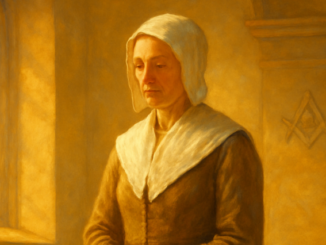
Symbolic comparison of Quaker testimonies and Freemasonry values
Quakers

Quaker Testimonies and Freemasonry Values Compared

Two spiritual traditions that seem to have little in common reveal surprising points of convergence when examined side by side. The Quakers, born in seventeenth-century England, articulated five core principles they call “testimonies.” Freemasons, whose modern organizational form took shape in that very same era, developed their own system of values designed to guide daily conduct. How do these two traditions relate to each other? And what does a comparison reveal about the universal human quest for spiritual depth? The Quaker Way: Life as Testimony The Quakers, formally known as the Religious Society of Friends, developed their five testimonies as practical expressions of inward faith. These testimonies are: simplicity, peace, integrity, community, and equality. Unlike rigid doctrines, they function as compass points for everyday life. George Fox, the founder of the Quaker movement, insisted that true spirituality does not reside in outward forms but in the direct experience of the Inner Light. For the Quaker, every action is a potential testimony. The choice to wear plain clothing was not a fashion statement — it was a stand against vanity. The refusal to swear oaths in court was not civil disobedience — it was a testimony of integrity, an insistence that […]
Empty chairs arranged in a circle symbolizing Quaker and Masonic inner reflection
Quakers

Quakers and Freemasons: Silence as a Shared Path

An empty chair in a circle. No minister, no liturgy, no prescribed words. Just people sitting together, waiting for whatever may arise from within. This image of a Quaker meeting evokes something that Freemasons instinctively recognize: the conviction that truth does not come from outside, but must be discovered in the depths of one’s own being. Today we explore the roots of the Religious Society of Friends and examine the threads that connect this movement to Freemasonry — as well as the places where their paths clearly diverge. A Spark in Seventeenth-Century England The Religious Society of Friends emerged in the 1640s, in the midst of an England torn apart by religious and political upheaval. George Fox, a restless young man from Leicestershire, found no answers in the churches of his day. In 1647, he experienced what he described as an inner revelation: there is no need for an outward priest or church building, because every human being carries an inner light directly connected to the divine. This was a revolutionary insight. Fox traveled across the country, gathering like-minded seekers around him. They called themselves “Friends of the Truth.” The nickname “Quakers” came from their opponents, who described how these […]