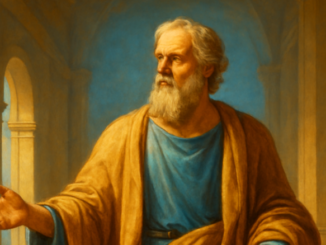
Plato’s Protagoras and the Masonic Quest for Virtue
In fifth-century Athens, an intellectual battle was raging that would permanently reshape Western civilization. On one side stood the Sophists — traveling teachers of wisdom who claimed they could teach virtue for a fee. On the other stood Socrates, a man who questioned every certainty. Their clash, immortalized by Plato in the dialogue Protagoras, touches on a question that remains central to Freemasonry today: can a person truly learn to become virtuous, or is moral excellence something that must grow from within? The Sophists and the Teaching of Virtue To understand the Protagoras, we need to return to Greece around 450 BCE. Athenian democracy was flourishing, and with it arose a new demand: citizens wanted to learn the arts of rhetoric, persuasion, and political participation. The Sophists stepped in to fill this gap. Protagoras of Abdera was the most famous among them. He openly claimed that he could teach young men political virtue — the art of good citizenship. This was revolutionary. Traditionally, the Greeks believed that virtue was inherited through noble birth or bestowed by the gods. Protagoras broke with this view entirely. He argued that virtue was a skill, comparable to carpentry or playing music, that anyone could […]