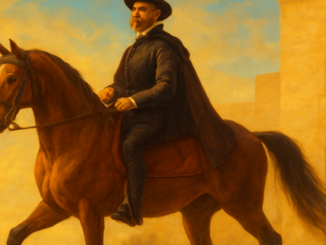
Montaigne on Horses: Philosophical Sources and Influences
When Michel de Montaigne writes about horses in wartime, it might seem like a lightweight topic at first glance. But a closer reading reveals a text deeply rooted in ancient philosophical traditions. Two worlds converge in this essay: the practical reality of a sixteenth-century nobleman who knew horses as instruments of war, and the contemplative world of the classical philosopher who saw in every ordinary phenomenon a mirror for human character. The philosophical background of this essay shows just how much Montaigne owed to thinkers like Plutarch, Seneca, and the broader currents of Stoicism and Skepticism — currents that continue to resonate within Freemasonry to this day. The Nobleman and the Philosopher To understand the philosophical backdrop of this essay, it helps to hold two perspectives side by side. On one hand, there is Montaigne the French nobleman, born in 1533 at the Château de Montaigne in the Dordogne. For him, the horse was a daily reality — a means of travel, hunting, and warfare. The sixteenth century was saturated with armed conflict, and the war horse was no metaphor but a living instrument upon which lives depended. Montaigne knew that world intimately. On the other hand, there is Montaigne […]