Masonic gavel resting on a rough ashlar stone symbolizing justice and growth
Philosophy & Ethics

The Judge’s Gavel: Justice as an Inner Building Stone

A courtroom delivers its verdict. Twenty years in prison for an act of irreversible violence. The gavel strikes wood, and in that single blow, something resonates far beyond legal statutes and procedural formality. What does justice truly mean when we look beyond the courtroom walls? In Freemasonry, the gavel is one of the most powerful working tools — not wielded to condemn, but to shape. A recent high-profile sentencing invites us to reflect on the deeper layers of guilt, restoration, and the moral responsibility every human being carries within. The Gavel: An Instrument of Judgment and Formation In the courtroom, the judge wields a gavel to affirm a ruling. It marks a moment of finality — a decisive conclusion. But look a little longer at this gesture, and you’ll discover that the same instrument carries an entirely different meaning in other contexts. The stonemason uses his mallet to work rough stone, slowly and deliberately shaping something that is not yet finished. In the Masonic tradition, this gavel symbolizes the willpower with which we shape ourselves, chipping away at the imperfections of our character — not through force, but through patience and self-awareness. A twenty-year prison sentence for a violent crime […]

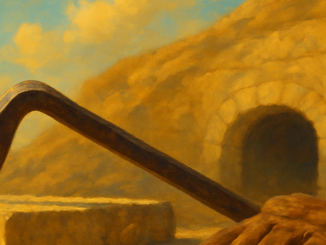
Crowbar as a Masonic symbol of breakthrough, leverage, and moral wisdom
Freemasonry & Society

The Crowbar as a Symbol of Breakthrough in Freemasonry

Among the oldest lever instruments known to humanity, the crowbar carries a symbolic weight that far exceeds its physical function. In the tradition of Freemasonry, where every tool holds a moral lesson, the crowbar stands as a compelling emblem of breakthrough — the art of opening what has become sealed, of creating passage where none existed before. But like every tool in the symbolic workshop, its meaning depends entirely on the hands that wield it and the intention behind the act. The Crowbar in Historical Perspective The crowbar belongs to the most ancient class of lever tools. Builders and craftsmen in antiquity relied on it to move massive stones and pry open tightly sealed joints. The English word “crowbar” itself derives from the tool’s split tip, which resembles a crow’s foot — a detail that reveals something essential about its nature. This is not a sledgehammer designed to shatter. It is an instrument of intelligence, one that seeks the right gap, the vulnerable point where minimal effort produces maximum effect. By the nineteenth century, the crowbar had become a symbol of the working class. Miners, railroad laborers, and construction workers carried it as their daily companion. It represented honest labor […]