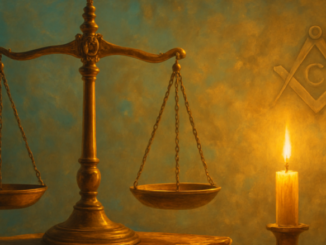
Open book of Montaigne's Essays beside Masonic square and compasses
Michel de Montaigne – Freemasonry & Connection

Montaigne on Good and Evil: A Masonic Perspective

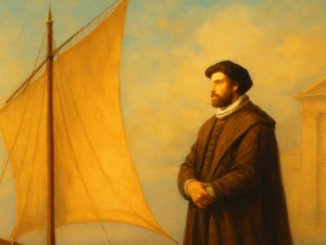
Two people witness the same event. One sees a disaster; the other sees an opportunity. Michel de Montaigne wrote about this very phenomenon in the sixteenth century, arguing that our perception of good and evil depends not on the facts themselves but on the opinions we hold about them. This idea touches on a fundamental question that also lies at the heart of Freemasonry: how do we arrive at moral judgment? And what connects the reflections of this French essayist to the search for light that Brethren have pursued for centuries? The World Through Montaigne’s Eyes Michel de Montaigne, the sixteenth-century French philosopher and writer, opens his essay with a simple but profound thesis: nothing is inherently good or evil. It is our mind that assigns value to the things around us. Banishment, which one person experiences as punishment, is embraced by another as liberation. Poverty drives some to despair, while others find genuine freedom in a life without possessions. Montaigne drew heavily on the Stoic tradition, particularly the works of Epictetus and Seneca. But he went further than his predecessors by weaving this philosophy into personal experience and concrete examples from his own time. His approach was never abstract […]

Ancient stone tools and rough ashlar symbolizing Freemasonry's journey toward justice
Symbolism & Rituals

Violence and Justice: A Historic Look at Human Darkness

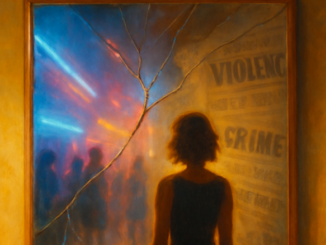
In 1762, Cesare Beccaria published his groundbreaking treatise on crime and punishment, arguing for a more just approach to violence and retribution. When we are confronted today with atrocities that defy our imagination, a fundamental question arises: how should society respond to such evil? Freemasonry, with its centuries-old emphasis on moral improvement and justice, offers a historical framework for reflecting on these profound questions. The Enlightenment Ideal of Justice The eighteenth century brought a fundamental shift in how Western civilization thought about crime and punishment. Philosophers like Voltaire and Montesquieu railed against arbitrary and cruel penalties. They believed that civilization was best served by a legal system that pursued rehabilitation rather than revenge. Beccaria’s work became a source of inspiration for reformers across Europe, including many Freemasons who debated the ideal society within the walls of their lodges. During this period, a new awareness emerged: extreme acts of violence were not merely crimes against an individual but offenses against the entire human community. The ritual work of Freemasonry reflected this understanding. The symbolic journey from darkness to light represented the possibility of moral transformation — even in the darkest of circumstances. The Rough Ashlar and the Shadow Side of Humanity […]

Masonic level and gavel symbolizing equality and fair judgment
Freemasonry & Society

Social Condemnation: Judgment Without a Gavel

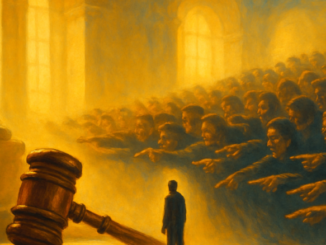
When news breaks that a public figure has been accused of a serious crime, society often delivers its verdict long before any judge has spoken. We have seen this pattern play out time and again: allegations become public, and within hours a collective judgment has already formed. This phenomenon touches on fundamental questions about justice, human dignity, and how we as a society deal with guilt and innocence. And it is precisely on these matters that Freemasonry — with its centuries-old tradition of moral reflection — has a surprising amount to offer. The Court of Public Opinion In our age of instant news and social media, the court of public opinion is permanently in session. The moment an accusation becomes public, millions of people begin forming their judgment. This happens without access to the evidence, without hearing both sides, and without the nuance that a proper trial demands. Social condemnation moves at lightning speed and is often irreversible — even when an acquittal follows later. This raises an uncomfortable question: what does this rush to judgment say about us? Freemasonry teaches its members that forming a judgment about a fellow human being is one of the gravest responsibilities a person […]