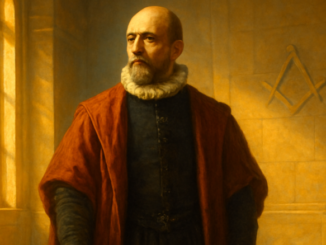
Montaigne on the Reward of Honour and Its Masonic Meaning
What is the highest reward a person can receive for extraordinary merit? Money? Power? Or something far more elusive — honour? In the seventh essay of his second book, Michel de Montaigne wrestles with precisely this question. He examines why honour stands apart from every other form of reward, and why it is at once the most precious and the most fragile currency a society possesses. Centuries later, his reflections still speak directly to what Freemasonry understands about virtue, recognition, and the dangers of hollow praise. What Is Montaigne’s Essay Really About? In this short but potent essay, ‘On the Reward of Honour,’ Montaigne advances a deceptively simple thesis: the only reward truly fitting for great and exceptional deeds is honour. Not material wealth, not estates, not titles of power. What matters, Montaigne argues, is pure recognition — the praise a community bestows upon someone who has risen above the ordinary. With this, he draws a sharp line between rewards you can count and rewards you can only feel. Montaigne opens by observing that princes and rulers have little to give beyond material goods. They can grant land, distribute gold, assign offices. But when a deed is truly exceptional, these […]