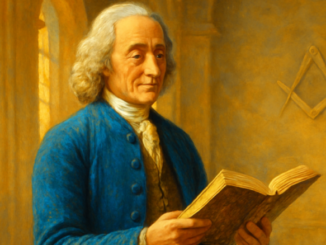
Explore how enlightenment thinkers shaped modern philosophy and religious tolerance. Discover influential ideas that continue to inspire intellectual discourse today.
Symbolism & Rituals
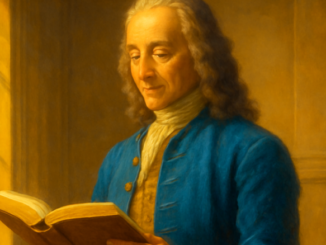
Voltaire on Freedom: Insights from the Philosophical Dictionary
What does it truly mean to be free? This seemingly simple question unfolds in Voltaire’s hands into a philosophical labyrinth where every exit leads to new questions. In his celebrated Philosophical Dictionary, the great Enlightenment thinker devotes a penetrating entry to the concept of liberty — and what he writes there continues to resonate in lodge rooms where brothers gather to reflect on human nature and its possibilities. The Paradox of Free Will Voltaire opens his inquiry into freedom with a deceptively straightforward question: can a person truly do what they want? The answer he offers is unsettlingly nuanced. Yes, a person can act according to their desires — but those desires themselves are not freely chosen. They arise from temperament, upbringing, circumstances, and countless other factors over which the individual has no control. Freedom thus becomes a relative concept, dependent on perspective and definition. This line of thought places Voltaire in a tradition stretching back to the Stoics and later developed by Spinoza. We experience ourselves as free, but that experience may well be an illusion. Yet Voltaire is no strict determinist who dismisses all human responsibility. On the contrary: precisely because the boundaries of our freedom remain unclear, […]