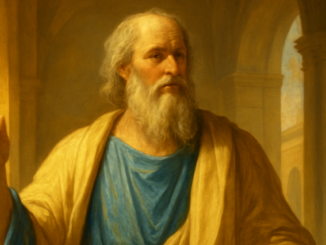
Plato’s Laws: Blueprint for a Just Society and Freemasonry
In 348 BC, Plato died in Athens while still working on his most extensive dialogue: The Laws. This final work contains no lofty abstractions — instead, it offers concrete prescriptions for governing a city. Where his celebrated Republic describes the perfect state through philosophical idealism, The Laws presents a workable alternative: a blueprint that accounts for human limitations. For anyone interested in the origins of Western legal philosophy, the design of communities, or the deeper principles behind Freemasonry, this ancient text remains an indispensable source. The Historical Context of The Laws Plato wrote The Laws in his old age, after twice attempting to realize his political ideals in Syracuse. Both attempts had failed. The philosopher had learned firsthand how difficult it was to translate philosophical principles into political reality. These disappointments profoundly shaped his final work: where the Republic placed the philosopher-king at the center of government, Plato now acknowledged that the law itself must hold supreme authority. No person, however wise, could stand above the law. The dialogue takes place during a pilgrimage on Crete, between three elderly men: an unnamed Athenian (generally regarded as Plato’s mouthpiece), the Spartan Megillus, and the Cretan Cleinias. Together, they design a legal […]