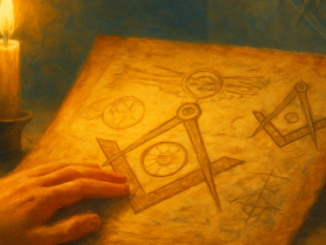
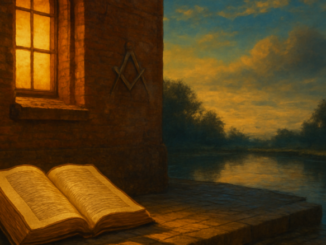
Open Bible showing the Book of Joel with Masonic symbols of light and darkness
Christianity

The Book of Joel: Destruction and Renewal as an Inner Journey

Most of us have lived through seasons when everything we carefully built seemed to crumble. A time when certainties wavered and we wondered whether the light would ever return. This is precisely the experience at the heart of the Book of Joel — one of the shortest yet most penetrating prophetic texts in the Old Testament. For Freemasons, this small but mighty book contains surprising layers of meaning that speak directly to the heart of the initiatory journey. A Plague That Strips Everything Bare The Book of Joel opens with a harrowing image: a locust plague that devours the land completely. Wave after wave of locusts descend, sparing nothing. The vines wither, the grain harvest fails, even the trees die. It is a picture of total devastation — one you may recognize from your own life, when setback followed setback in relentless succession. What stands out is that the prophet does not look away from the suffering. He invites the people to truly face the destruction, to mourn and to grieve. In Freemasonry, we know a similar moment: the confrontation with our own imperfection before we can begin to build. You can only rebuild once you have honestly looked at […]
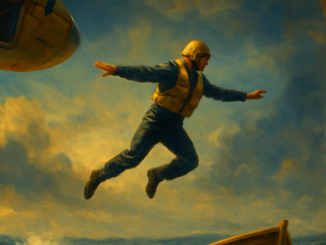
Coast guard officer leaping onto a drifting boat on a stormy ocean
Spiritual Traditions

Leaping Into the Unknown: Freemasonry, Courage, and Rescue

You may have seen the footage — a coast guard officer leaping without hesitation onto a rudderless boat in the middle of a churning ocean. It’s the kind of image that stirs something deep within us, something that goes beyond mere admiration for physical bravery. Watching that leap, I found myself thinking about the deepest questions of human existence, and about the journey we all share — a journey that lies at the very heart of Freemasonry. When the Helm Slips From Your Hands Imagine yourself on the open sea. The water stretches endlessly around you, and suddenly nothing works the way it should. The rudder won’t respond, the engine sputters, and the waves take over. This is hardly a rare metaphor in human life. We all know those moments when we lose control, when our carefully plotted course slips away and we find ourselves drifting at the mercy of circumstances. In Freemasonry, the stormy sea has long served as a symbol for the unrest of an unenlightened mind. The candidate who first enters the lodge is often described as a seeker — a ship that has not yet found a safe harbor. This is not weakness. It is the […]

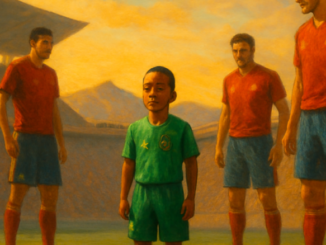
Cape Verde football team embodying courage and unity on the world stage
Spiritual Traditions

The Unexpected Underdog: What Cape Verde Teaches Us About Courage

In a crowded living room, a Freemason watches the screen intently. Cape Verde — an island nation of barely half a million people — is holding its own against the mighty Spain. Somewhere in that tension, in that improbable resistance, he recognizes something he has also felt in the lodge: the power that emerges when humility and determination meet the seemingly impossible head-on. When the Small Challenges the Great There are moments in sport that transcend goals and statistics. Today’s World Cup clash, in which Cape Verde nearly pulled off a stunning upset against Spain, is one of those moments. A team whose players trace their roots to both the Cape Verdean islands and the Netherlands showed that conviction can sometimes outweigh reputation. For anyone willing to look beyond the scoreboard, a profound spiritual lesson unfolds. In Freemasonry, we hold the principle that true growth does not come from displays of strength, but from acknowledging our own limitations. The candidate who enters the lodge for the first time does not arrive as a conqueror — he arrives as a seeker. He comes not to impress, but to learn. Much like Cape Verde stepped onto the pitch without any expectation of […]

Red traffic light glowing at night as a symbol of spiritual pause
Spiritual Traditions

The Red Traffic Light as a Spiritual Teacher

You may have seen the footage. Thousands of Japanese football fans celebrating wildly in the streets — singing, dancing, erupting with joy — until the traffic light turns red. Then everything stops. Silence. Stillness. Only when the light turns green does the celebration resume. This scene struck me deeply. Not because of the football, but because of what it reveals about the human soul and its capacity for inner freedom. A Moment of Recognition Imagine yourself surrounded by thousands of people cheering, singing, and dancing. The emotion is overwhelming, the energy contagious. And then, at the peak of collective ecstasy, a red light appears. A simple signal. No police officer, no authority intervening. Just you and that light. What do you do? The Japanese supporters chose stillness. Not out of fear of punishment, but from something deeper — a rooted awareness that true joy does not vanish through a moment of restraint. On the contrary, they demonstrated that discipline and celebration can strengthen one another rather than cancel each other out. This is a spiritual lesson that resonates powerfully with me as a Freemason. The Art of the Voluntary Halt In Freemasonry, we often speak about subduing our passions. This […]

Symbolic light illuminating Masonic and Gnostic spiritual traditions
Spiritual Traditions

What Connects Freemasonry and Gnosis? Exploring Inner Knowledge

When we explore the connection between Freemasonry and Gnostic traditions, we step into territory where ancient questions come alive once more. What does it truly mean to know? And how does knowing differ from believing? These are questions that searching minds have been asking since the early centuries of the Common Era — and they still echo through the lodges of today. The relationship between these two traditions runs deeper than most people realize, and it has something genuinely valuable to offer us in the present moment. Why Do People Compare Freemasonry with Gnostic Thought? It’s a fair question to start with, and the comparison doesn’t arise by accident. Both traditions emphasize that outward forms are merely carriers of deeper meaning. A Gnostic from antiquity would say that the material world is a veil behind which a higher reality is hidden. A Freemason speaks of symbols that only reveal their secrets when the gaze turns inward. In both cases, the personal inner journey stands at the center — not the blind acceptance of dogma. Yet the resemblance is subtler than it first appears. Gnosis, the Greek word for “knowledge,” refers to a direct, experiential form of knowing. It isn’t about […]

Open Bible showing the Book of Hosea beside Masonic square and compasses
Christianity

Hosea and the Freemason: Two Perspectives on Faithfulness

The Book of Hosea occupies a remarkable place in the Hebrew Bible. Written by an eighth-century BCE prophet, it speaks of broken promises, unfaithfulness, and the possibility of restoration. But what happens when a biblical scholar and a Freemason each pick up the same text? Both approaches open windows onto deep symbolism — though from very different rooms. The Biblical Scholar Reads: A Covenant History For the biblical scholar, Hosea is first and foremost a historical document. The book emerged during a time of political instability, when the Northern Kingdom of Israel was caught between rival empires. The prophet received an extraordinary commission: he was to marry a woman who would be unfaithful to him. This marriage became a living metaphor for the relationship between the Divine and His people. The scholar analyzes linguistic structures, compares manuscripts, and situates the text within its original context. Unfaithfulness is understood here as idolatry — the straying toward foreign gods and political alliances. The academic approach seeks to uncover what the text meant for its original audience. Which cults were being criticized? Which historical events are reflected in the prophecy? The book closes with a promise of renewal, and the scholar examines how […]

Two spiritual paths converging — Gnostic knowledge and Masonic symbolism
Spiritual Traditions

Inner Knowledge in the Netherlands: Two Paths to the Light

Anyone who explores the pursuit of gnosis in the Netherlands quickly discovers that the search for inner knowledge takes many forms. Some find their way through Gnostic communities, others through Freemasonry. Both traditions share a deep longing: to uncover the truth behind the veil. Yet their methods and philosophies differ considerably. In this article, we place two spiritual worlds side by side — not to judge, but to understand what they have in common and what we can learn from both. The Gnostic Tradition in the Netherlands: Knowledge as Liberation The word gnosis comes from Greek and literally means knowledge. But this is not ordinary knowledge gleaned from textbooks. It refers to a direct, inner experience of the divine. Since the early twentieth century, the Netherlands has harboured a vibrant interest in this spiritual current. Various communities and study groups devote themselves to ancient Gnostic texts, seeking to make their wisdom applicable to everyday life. At the heart of Gnostic thought lies the idea that the material world is a reflection of a higher reality. Every human being carries a divine spark within, yet has forgotten it. By acquiring inner knowledge — by awakening — one can return to one’s […]

Daniel standing calmly in the lions' den symbolizing Masonic steadfastness
Christianity

Daniel and the Lions’ Den: Steadfastness in Practice

You’re about to make a difficult decision. Colleagues expect you to go along with the crowd, friends don’t understand your hesitation, and somewhere deep inside, you know what the right thing to do is — but it may cost you dearly. The Book of Daniel speaks directly to moments like these. This ancient Old Testament text doesn’t offer abstract theology; it presents concrete examples of people who followed their inner compass under immense pressure. For Freemasons, these stories resonate with one of the Craft’s central questions: how do you build a character that remains standing when the world around you is shaking? The Heart of the Book of Daniel The Book of Daniel tells the story of a young man from Judah who is taken as an exile to Babylon. There he is educated at the royal court, given a new name, and immersed in a culture that is entirely different from his own traditions. Despite tremendous pressure to conform completely, Daniel holds fast to his inner principles. The book consists of two parts: stories of steadfastness under trial, and apocalyptic visions of the future. The most well-known stories are that of the fiery furnace — in which three of […]

Karel van Zweden Masonic lodge in Zutphen — a place of spiritual tradition
Spiritual Traditions

Karel van Zweden Zutphen: Spiritual Legacy of a Masonic Lodge

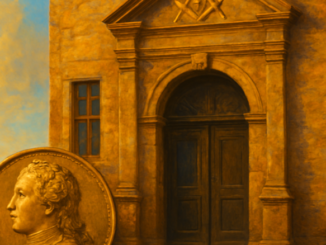
In the heart of the historic Hanseatic city of Zutphen lies a remarkable place where spirituality and tradition converge. The Karel van Zweden lodge bears the name of an eighteenth-century monarch renowned for his pursuit of inner wisdom. For over two centuries, this Masonic lodge has served as a meeting point for those who grapple with life’s greatest questions. What makes this place so special? And what spiritual lessons can we still draw from its enduring legacy today? The Spiritual Roots of Karel van Zweden Zutphen When we speak of the Karel van Zweden lodge in Zutphen, we enter a world where the outer and the inner merge. The lodge’s namesake, a Swedish prince of the eighteenth century, was known for his fascination with esoteric traditions and his pursuit of enlightenment in the philosophical sense of the word. He saw in Freemasonry a path to self-knowledge that reached far beyond social standing or worldly power. This spiritual foundation is still reflected in the work carried out within the lodge today. Freemasons in Zutphen come together not to receive answers, but to ask questions. They seek what connects them as human beings, beyond the superficial differences of background, profession, or worldview. […]

Ancient temple vision symbolizing Ezekiel's connection to Masonic philosophy
Christianity

Ezekiel and Freemasonry: Visions as Inner Building Blocks

What can the enigmatic visions of a sixth-century BCE prophet possibly teach us today? The Book of Ezekiel brims with images that stir the imagination: wheels within wheels, a valley of dry bones, and a temple described down to the smallest measurement. For those who read with a Masonic eye, these ancient texts open up a world of symbolism that turns out to be remarkably relevant. Let’s enter into conversation with this ancient book and discover what it has to offer the modern Freemason. Who Was Ezekiel, and Why Should Freemasons Care? Ezekiel was a priest who was carried into exile in Babylon around 597 BCE, along with many other inhabitants of Judah. There, far from the destroyed Temple in Jerusalem, he received a series of extraordinary visions that he recorded in meticulous detail. But why should a modern person — and especially someone interested in Freemasonry — spend time with these ancient texts? The answer lies in the universal themes woven throughout the book. Ezekiel speaks of destruction and rebuilding, of personal responsibility, of the possibility of starting anew. These are themes that sit at the very heart of Freemasonry: the idea that a human being is like a […]

Vrijmetselarij - De Eerste Graad Vrijmetselarij (Leerling) – Jouw Avontuur Begint
Spiritual Traditions

The First Degree in Freemasonry: Your Journey Begins Here

The First Degree in Freemasonry — known as the Entered Apprentice — is far more than a simple membership ceremony. It marks the beginning of a deeply personal and symbolic journey, one that has the power to fundamentally change how you see the world and your place within it. In this initial stage, you don’t just learn about Freemasonry — you begin to discover yourself. The First Degree lays the foundation upon which everything that follows is built. It is your starting point, your call to awareness, and the first step in a profound transformation. The Entered Apprentice: A Gateway to Deeper Understanding Freemasonry is built upon three foundational degrees: the Entered Apprentice, the Fellowcraft, and the Master Mason. The First Degree is the most crucial beginning. As an Entered Apprentice, you learn what it truly means to live consciously — to ask questions rather than chase answers, and to examine your own behavior with honesty and humility. From the moment of your initiation, you gain access to a rich world of symbolism, ritual, and reflection. But none of this is passive or theoretical. It is an active invitation to work on your own rough ashlar — to shape yourself […]

Ruined temple stones with light breaking through symbolizing Masonic rebuilding
Christianity

Lamentations and Freemasonry: Building After Destruction

You probably know the feeling: something valuable has been lost, and the void left behind seems impossible to bridge. A relationship, a dream, a certainty you always took for granted. In moments like these, you wonder whether anything new can ever grow on the rubble of what once was. The ancient Book of Lamentations speaks to exactly this kind of devastation — and yet, hidden within its raw poetry lies a surprising message that has inspired Freemasons for centuries: it is precisely in the ruins that rebuilding begins. A City in Ruins, a Soul in Mourning Lamentations is a collection of five poems describing the destruction of Jerusalem. Written after the fall of the city in 586 BCE — when the Temple was razed and the people driven into exile — the texts are raw, unpolished, and filled with despair. Streets that once bustled with life lie abandoned. The Temple, the spiritual heart of an entire people, is reduced to scorched stone. But here is something remarkable: these laments are not chaotic wailing. They follow a strict alphabetical structure — an acrostic in which each verse begins with a successive letter of the Hebrew alphabet. In the midst of the […]

Ancient potter shaping clay symbolizing Jeremiah and Masonic transformation
Christianity

Jeremiah and Freemasonry: The Prophet as Inner Builder

In 586 BCE, an event unfolded that would shake the Jewish people to their very core: the destruction of the Temple in Jerusalem by the Babylonians. At the center of this historical catastrophe stood a figure who had been sounding warnings for decades. The prophet Jeremiah, whose name has become synonymous with lamentation and prophecy of doom, also carried within him a message of profound hope. For those willing to look beyond the rubble, his vision of rebuilding extended far beyond walls of stone — it reached into the very depths of the human heart. A Prophet in Times of Decline Jeremiah’s prophetic calling began around 627 BCE, during a period when the kingdom of Judah was slowly sliding toward political and moral collapse. What makes the Book of Jeremiah so remarkable is its deeply personal tone. Unlike many other prophetic writings, Jeremiah reveals a man who struggles with his mission, who doubts and suffers. He was called to uproot and tear down, but also to build and to plant. This dual commission forms the very heart of his message. Understanding the historical context is essential to grasping Jeremiah’s significance. The Assyrian Empire had collapsed, Egypt and Babylon were vying […]

Ancient temple illuminated by light symbolizing Isaiah and Freemasonry
Christianity

Isaiah and Freemasonry: Prophetic Images of Light and Building

Somewhere around 740 BCE, in the kingdom of Judah, a voice rose — not from a man who had chosen the role of prophet, but from one who had been called to it. In a vision filled with smoke and seraphim, he glimpsed something his contemporaries could not yet grasp: a future in which light would drive out darkness and a broken people would rise again as builders of a new age. The images woven through the Book of Isaiah continue to resonate millennia later, and their echoes are remarkably vivid in the symbolic language of Freemasonry. A Calling in the Temple The sixth chapter of Isaiah contains one of the most striking calling visions in all of biblical literature. The prophet finds himself in the temple when he sees a throne surrounded by six-winged beings. One of the seraphim touches a burning coal to his lips, purifying him of unrighteousness. This moment of transformation — from the impure to the pure — lies at the heart of everything Isaiah will go on to proclaim. For Freemasons, this theme feels deeply familiar. The candidate who enters the lodge undergoes a symbolic purification of his own. He leaves the profane world […]

Vrijmetselarij - Freemasonry and Religion – A Bridge, Not a Wall
Spiritual Traditions

Freemasonry and Religion – A Bridge, Not a Wall

In a world where religion often draws dividing lines, Freemasonry offers something rare: a space where differences are not obstacles but invitations to dialogue. Freemasonry is not a religion. Nor is it a counter-movement. It is a centuries-old brotherhood where people — believers and non-believers alike — come together to work on themselves, their values, and their contribution to the world. This naturally raises questions. If Freemasonry isn’t a religion, why does spiritual symbolism play such a central role? And how can a community that prescribes no particular belief still be so profoundly meaningful and morally grounded? Let’s take a closer look at the unique relationship between Freemasonry and religion — and what it means for your personal development and ethical growth. No Dogma, But Genuine Depth Freemasonry makes no demands on your faith. Whether you are Christian, Muslim, Jewish, Hindu, humanist, or agnostic — as long as you believe in something greater than yourself, you are welcome. That “higher power” doesn’t need a name. What matters is that you recognize that humanity is not the center of everything, but part of a larger whole. There is no theological debate, no creed to recite, no prescribed path. Instead, Freemasonry offers […]

New Year fireworks symbolizing Masonic reflection and renewal at midnight
Spiritual Traditions

Old & New Year: A Time for Reflection and Renewal

The turning of the year is one of those rare moments that invites us to pause — to look back at the road we’ve traveled and to gaze ahead at the path yet to unfold. New Year’s Eve is more than just the final page of a calendar. It is a deeply personal threshold, a symbolic crossing from what was into what could be. It is a time for honest reflection, for releasing what no longer serves us, and for setting intentions that align with who we truly wish to become. The Deeper Meaning Behind Our Traditions Fireworks lighting up the midnight sky, champagne glasses raised in celebration, the joyful company of loved ones — these familiar rituals give the night its festive character. But beneath the surface of these traditions lies a deeper message. Fireworks remind us that even in the darkest of times, light and energy can break through. Gathering with those we love symbolizes our deep need for connection and our shared wish for happiness. And the countdown itself serves as a powerful reminder that every single second holds within it the potential for a new beginning. Reflection: Shining a Light on the Past Year The end […]

Desert wilderness path symbolizing the spiritual journey in Freemasonry
Religion

Numbers: The Spiritual Journey Through the Wilderness

The Book of Numbers from the Old Testament tells the story of the Israelites’ journey through the wilderness on their way to the Promised Land. Rich in symbolism, this ancient text offers profound lessons on leadership, trust, and perseverance. For Freemasons, Numbers serves as a powerful metaphor for the spiritual journey we all undertake — from darkness and ignorance toward light and enlightenment. In this article, we explore how this biblical book can inspire us on our own Masonic path. What Is the Book of Numbers? Numbers is the fourth book of the Bible and chronicles the forty-year journey of the Israelites through the desert wilderness. It documents the challenges, conflicts, and miracles that occurred along the way. The book’s English name derives from the two censuses — or “numberings” — of the people that it records. However, the central theme runs far deeper than mere counting: it is a story of growth through trial, of a people being shaped and refined by their experiences in an unforgiving landscape. The Wilderness as a Test of Faith The wilderness journey symbolizes a period of profound transformation and self-discovery. In Masonic thought, the desert represents the inner quest for truth — that […]

Open Bible showing the Book of Leviticus with Masonic symbolism
Spiritual Traditions

Leviticus: A Moral Guide for Spiritual Purification

The Book of Leviticus, the third book of the Old Testament, stands as one of the most complex and symbolically rich texts in the Bible. Focused on rituals, laws, and offerings designed to promote a holy way of life, Leviticus holds a particular fascination for Freemasons. Its themes of discipline, dedication, and purification resonate deeply with the Masonic journey toward spiritual enlightenment. In this article, we explore how Leviticus can inspire personal and moral growth — not just as a religious text, but as a timeless guide for those walking the path of self-improvement. What Is the Book of Leviticus? Leviticus is the third book of the Bible and contains the rules and ordinances that Moses conveyed to the Israelites. At first glance, many of these laws appear strictly ritualistic or culturally specific to the ancient world. Yet beneath the surface, they carry universal lessons about purity, devotion, and justice — themes that transcend time and culture. For the thoughtful reader, and especially for Freemasons, Leviticus offers far more than a historical code of conduct; it provides a framework for understanding the relationship between outward discipline and inward transformation. Holiness and Purification One of the central themes running through Leviticus […]

Candlelit Masonic lodge with checkered floor evoking the Exodus journey
Religion

Exodus: The Journey to Freedom and Inner Growth

Picture a lodge draped in silence, candlelight flickering across the black-and-white checkered floor. A brother reads aloud from the Book of Exodus — the story of a people who cast off their chains in the dead of night and set out into the wilderness, moving toward something they cannot yet name. The words hang in the air, and everyone in the temple feels it: this story is not merely about an ancient people in a distant land. It is about us. What makes the story of Exodus so indelible? Why does this tale of slavery, liberation, and an endless trek through the desert still move us, thousands of years after it was first told? And what does a Freemason gain by returning to this ancient narrative again and again — not as a historical document, but as a mirror for the soul? Egypt as Inner Captivity In the Book of Exodus, everything begins with slavery. The Israelites groan under the yoke of Pharaoh, trapped in a system that reduces them to mere instruments. Within Freemasonry, this image is far more than a historical fact — it is a powerful allegory. Egypt symbolizes every form of inner captivity: the chains of […]

Open Volume of the Sacred Law displaying Genesis in a Masonic lodge setting
Religion

Genesis and Freemasonry: The Deep Symbolism of the Beginning

A candle flickers. A man sits alone in a dimly lit room, a heavy book open on his lap. His eyes trace the very first lines of the Old Testament — words he has read dozens of times before. Yet tonight, they feel as though they are speaking to him for the first time. Not as an ancient story about the origin of the world, but as a mirror posing a single, penetrating question: where does your creation begin? It is a question that has echoed through Masonic lodges for centuries — not as a theological puzzle, but as an invitation to self-examination. The Book of Genesis is one of the most widely read texts in human history, revered across diverse faith traditions. But what makes this creation narrative so particularly meaningful to the Freemason? The answer lies in its imagery. Genesis speaks in symbols that resonate directly with Masonic philosophy: the passage from darkness to light, from chaos to order, from unconscious existence to a life lived with awareness and intention. Becoming: Every Beginning as a Threshold Experience The word Genesis derives from the Greek for “becoming” or “origin.” That alone is telling. In Freemasonry, the concept of a […]