Ancient Greek temple columns symbolizing Plato's Gorgias and Freemasonry
Plato – Freemasonry & Connection

Plato’s Gorgias: Rhetoric, Justice and Freemasonry

In fifth-century Athens, a battle raged that remains profoundly relevant to this day. It was not fought over land or wealth, but over something far more fundamental: whether words should serve truth or merely serve the power to persuade. Plato captured this tension in his dialogue Gorgias, a work that strikes at the heart of what it means to live a just life. For Freemasons — who place the pursuit of truth and moral perfection at the center of their craft — this ancient conversation offers remarkably timely insights into authenticity, virtue, and the true nature of human connection. The Historical Context of a Philosophical Confrontation Around 380 BCE, Plato composed the Gorgias, named after the celebrated orator from Sicily who had visited Athens. The dialogue is set during a period when the Sophists — itinerant teachers of eloquence — wielded enormous influence over public life. They taught the art of defending any position persuasively, regardless of its truth. Gorgias himself was renowned for his ability to make the weaker argument appear the stronger. Socrates, Plato’s teacher and the protagonist of the dialogue, confronted this worldview head-on. Where the Sophists viewed rhetoric as a neutral technique, Socrates insisted that true […]
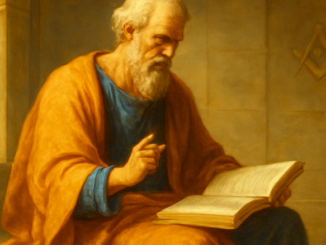
Ancient Greek philosophical dialogue symbolizing truth and Masonic justice
Plato – Philosophical Background

Plato’s Gorgias: Truth, Power, and Freemasonry’s Quest

Imagine finding yourself in a debate where your opponent has no interest in truth — only in winning. How do you respond? This is precisely the situation Socrates faces in Plato’s dialogue Gorgias. It is a text that challenges you to confront a fundamental question: what matters more, persuasive speech or righteous action? This question has echoed through the centuries and strikes at the very heart of what Freemasons pursue in their rituals and labour. The Sophists and Their Challenge to Philosophy To understand Plato’s Gorgias, you need to transport yourself to fifth-century Athens. The city was alive with intellectual activity, and one group of thinkers commanded particular attention: the Sophists. These were itinerant teachers who, for a fee, instructed young Athenians in the art of speaking and persuading. Figures such as Protagoras, Hippias, and of course Gorgias of Leontini were celebrated for their eloquence. The Sophists represented a radically new perspective. Protagoras declared that “man is the measure of all things,” suggesting that truth is relative. For them, rhetoric was not a means of discovering truth but a technique for persuading others, regardless of the content. This relativism posed the direct intellectual challenge against which Plato, through the voice […]

Ancient Greek columns symbolizing Plato's Gorgias and Masonic philosophy
Plato – Content & Summary

Plato’s Gorgias: Rhetoric, Justice, and the Good Life

What is the value of persuasion when it is not rooted in truth? This question lies at the beating heart of Plato’s dialogue Gorgias, a work in which the Greek philosopher examines the very foundations of rhetoric and exposes its relationship to justice. The dialogue invites us to reflect on a timeless dilemma: is it better to suffer injustice or to commit it? For those familiar with the symbolic language of Freemasonry, this ancient text opens a fascinating door to deeper reflection on inner righteousness and the architecture of the soul. The Setting and the Interlocutors The dialogue takes place in Athens, where Socrates engages with three distinctive figures: Gorgias, the famous orator from Leontini; Polus, his fiery student; and Callicles, an ambitious Athenian aristocrat. Each represents a different attitude toward power, persuasion, and morality. Gorgias presents himself as a master of the art of speaking, capable of convincing any audience regardless of the subject. Polus glorifies the power that rhetoric bestows. Callicles goes furthest of all, openly defending the right of the strongest to rule. Socrates assumes the role of the searching questioner — the one who, through apparent ignorance, systematically dismantles the certainties of his conversation partners. What […]

Ancient Greek philosophical dialogue symbolizing Masonic search for virtue
Plato – Freemasonry & Connection

Plato’s Protagoras: Can Virtue Be Taught? A Masonic View

Picture yourself sitting across from a wise teacher. You ask him whether becoming a good person is something you can learn, or whether it’s something you must be born with. He looks at you and says: that depends on what you mean by learning. This is precisely the question Plato posed over two thousand years ago in his dialogue Protagoras. And it is the same question Freemasons ask themselves every time they enter the lodge. What Did Plato Actually Mean by Teachability? In the Protagoras, Plato stages a conversation between his teacher Socrates and the renowned Sophist Protagoras. The central question seems straightforward enough: can virtue be taught? Protagoras insists it can. After all, he makes his living selling wisdom, teaching young Athenians how to become better citizens. Socrates isn’t so sure. If virtue can truly be taught, why do so many excellent fathers fail to pass their virtue on to their sons? But here’s the crucial nuance: Socrates does not deny that people can grow in virtue. What he challenges is the method. Can you transmit virtue the way you teach someone arithmetic? Or does moral growth demand something different — something deeper? This distinction matters enormously for anyone […]

Ancient Greek temple columns symbolizing Plato's philosophy and Freemasonry
Plato – Philosophical Background

Plato’s Protagoras and the Masonic Quest for Virtue

In fifth-century Athens, an intellectual battle was raging that would permanently reshape Western civilization. On one side stood the Sophists — traveling teachers of wisdom who claimed they could teach virtue for a fee. On the other stood Socrates, a man who questioned every certainty. Their clash, immortalized by Plato in the dialogue Protagoras, touches on a question that remains central to Freemasonry today: can a person truly learn to become virtuous, or is moral excellence something that must grow from within? The Sophists and the Teaching of Virtue To understand the Protagoras, we need to return to Greece around 450 BCE. Athenian democracy was flourishing, and with it arose a new demand: citizens wanted to learn the arts of rhetoric, persuasion, and political participation. The Sophists stepped in to fill this gap. Protagoras of Abdera was the most famous among them. He openly claimed that he could teach young men political virtue — the art of good citizenship. This was revolutionary. Traditionally, the Greeks believed that virtue was inherited through noble birth or bestowed by the gods. Protagoras broke with this view entirely. He argued that virtue was a skill, comparable to carpentry or playing music, that anyone could […]

Ancient Greek philosophers debating virtue in a classical setting
Plato – Content & Summary

Plato’s Protagoras: Can Virtue Be Taught?

Before dawn, young Hippocrates pounds on the door of Socrates, his eyes blazing with excitement. The famous sophist Protagoras has arrived in Athens, and Hippocrates is desperate to become his student. But Socrates asks a question that changes everything: what exactly do you expect to learn? This moment launches one of Plato’s most vivid dialogues — a work that wrestles with a question as urgent today as it was in ancient Athens: is virtue something that can be taught, or is it an innate quality that some simply possess and others do not? The Encounter Between Socrates and Protagoras In the luxurious home of the wealthy Callias, Socrates meets the renowned sophist Protagoras, surrounded by admiring students and other celebrated thinkers such as Hippias and Prodicus. Protagoras is no ordinary teacher — he charges substantial fees for his instruction and claims he can train young men to become better citizens. Socrates, ever the critical questioner, issues a challenge: if virtue can truly be taught, why do great statesmen consistently fail to make their own sons as virtuous as themselves? This is no mere academic exercise. It strikes at the heart of what it means to be a good person and […]

Ancient Greek philosophical dialogue symbolizing Masonic search for virtue
Plato – Freemasonry & Connection

Plato’s Meno and Freemasonry: Discovering Virtue by Asking

Picture yourself in lodge after an initiation ceremony. A brother turns to you and asks: what is virtue, really? You open your mouth to answer — and then realize you don’t quite know. This moment of not-knowing is exactly where Plato’s dialogue Meno begins, and where the Freemason’s most important work can take place. A Question That Changes Everything In the Meno, the Thessalian nobleman Meno poses a seemingly simple question to Socrates: can virtue be taught? Socrates responds with a counter-question that drives the entire dialogue: how can we teach something if we don’t even know what it is? This question isn’t meant to frustrate. It opens the door to deeper understanding. For the Freemason, this dynamic is deeply familiar. With every degree advancement, you encounter symbols and rituals whose meaning is never directly explained. You must search for yourself, ask questions, and discover that the question is often more important than the answer. Plato called this the method of elenchus — the systematic examination of what you think you know, until you discover what you truly know. Knowledge Already Within You One of the most celebrated passages in the Meno is the exchange between Socrates and a young […]

Ancient Greek philosophical dialogue connecting Plato's Meno to Freemasonry
Plato – Philosophical Background

Plato’s Meno: Philosophical Roots of Virtue and Knowledge

Can virtue be taught, or does every person already carry it within? This question, posed by Meno to Socrates in one of Plato’s most celebrated dialogues, touches on fundamental issues that still resonate today. The Meno offers not only a philosophical investigation into the nature of knowledge and morality but also opens a window into the intellectual world in which Plato wrote. For Freemasons, this dialogue strikes a particularly familiar chord: the quest for inner illumination, the role of symbols in unveiling hidden wisdom, and the conviction that true knowledge does not come from without but is awakened from within. The World of Plato: Athens and the Sophists To understand the Meno, we first need to step into the intellectual arena in which Plato operated. Fifth-century Athens was buzzing with philosophical activity. Sophists like Gorgias and Protagoras traveled the Greek world, teaching rhetoric, political skills, and what they called “virtue” to wealthy young men. Their approach was pragmatic: virtue, in their view, was a skill that could be learned, much like writing or arithmetic. Socrates, Plato’s teacher, took a radically different stance. Where the Sophists confidently claimed to sell wisdom, Socrates began every conversation by acknowledging his own ignorance. This […]

Ancient Greek dialogue scene representing Plato's Meno and the pursuit of virtue
Plato – Content & Summary

Plato’s Meno: Virtue and Knowledge as Foundations for Growth

In fifth-century Athens, a young aristocrat named Meno posed a question that philosophers have grappled with ever since: can virtue be taught, or is it an innate quality? Plato recorded this exchange in a dialogue that not only explores the foundations of ethics but also introduces a revolutionary theory of knowledge. The Meno remains one of the most accessible yet profoundly deep works in Western philosophy — a text that compels us to reflect on what we truly know and how we can become better people. For those on the Masonic path, where self-improvement and the pursuit of wisdom stand at the very heart of the Craft, this ancient dialogue holds remarkable resonance. The Central Question of the Dialogue The Meno opens with a direct and seemingly simple question from its title character to Socrates: is virtue something that can be taught, does it come through practice, or is it naturally present in human beings? True to his method, Socrates refuses to answer the question before first establishing what virtue actually is. This leads to an inquiry characteristic of Plato’s early dialogues — the dismantling of false certainties to create space for genuine understanding. Meno makes several attempts at a […]

Ancient Greek philosopher in contemplation symbolizing Freemasonry and Plato
Plato – Freemasonry & Connection

Plato’s Phaedo and Freemasonry: A Shared Quest for Light

Imagine sitting in a room with your closest friends, knowing this conversation will be your last. What would you want to talk about? For Socrates, in the final hours before his death, the answer was clear: the immortality of the soul and the meaning of a life well lived. In Plato’s dialogue Phaedo, we find not only a philosophical masterpiece on life and death, but also a wellspring of insights that resonate remarkably with the core principles of Freemasonry. The Setting of a Final Farewell The Phaedo unfolds in Socrates’ prison cell on the day of his execution. His students — Phaedo, Simmias, Cebes, and others — gather around their teacher for one last conversation. What follows is neither a lament nor a bitter goodbye, but a calm, profound exploration of what it means to live and die as a philosopher. Socrates faces his own death with a serenity that both astonishes and inspires his companions. This composure is not indifference or denial. It is the fruit of a life devoted to self-reflection and the pursuit of truth. Socrates spent his entire existence examining the human condition, asking difficult questions, and challenging false certainties. Now, at the end, he reaps […]

Ancient Greek cup symbolizing Socrates' hemlock and the immortality of the soul
Plato – Philosophical Background

Plato’s Phaedo: Philosophical Roots of Immortality

A cup. Simple earthenware, filled with a liquid that ends a life. Yet it is precisely this ordinary object that becomes the stage for one of the most profound philosophical conversations in the Western tradition. As Socrates approaches the hemlock, a dialogue unfolds that asks what remains of us when the body dies. The cup becomes a threshold — a passage from the visible to the invisible. To understand why Plato wrote this dialogue the way he did, we must descend into the philosophical sources that nourished his thought. The Orphic Mysteries and the Soul as Prisoner Plato’s conviction that the soul is immortal and the body merely a temporary dwelling is deeply rooted in the Orphic tradition. This mystery school, named after the mythical singer Orpheus, taught that the soul is divine in origin but became trapped in the body through a primordial transgression. The Greek word soma (body) was linked by the Orphics to sema (tomb) — the body as the soul’s burial chamber. We recognize this idea in the Phaedo when Socrates describes the body as an obstacle preventing the soul from attaining true knowledge. The senses deceive us; desires cloud our judgment. Only in death, when […]

Ancient Greek philosopher Socrates discussing the immortality of the soul
Plato – Content & Summary

Plato’s Phaedo: The Soul and Its Immortality Explained

What happens to the soul when the body dies? Is death the final chapter, or does it mark a transition to something greater? These questions are not merely philosophical curiosities — they touch the very core of human existence. In the Phaedo, one of his most profound dialogues, Plato invites us into the final hours of Socrates, who is about to drink the hemlock. What follows is not a eulogy steeped in sorrow, but a lucid argument for the immortality of the soul. Why Did Plato Write This Dialogue? The Phaedo is far from an abstract treatise detached from real life. On the contrary, Plato situates his most profound reflections on the soul precisely within the context of his master Socrates’ death. This deeply personal setting lends the question of immortality an emotional urgency that no theoretical exercise could achieve. Socrates’ friends are gathered in his cell, torn between grief and an almost desperate curiosity. They want to know: is this truly the end? Plato uses this dramatic setting to weave philosophy together with existential reality. The dialogue demonstrates that wisdom is not an escape from life, but rather a way of confronting death head-on. Socrates does not speak as […]

Ancient Greek columns symbolizing duty and Masonic brotherhood
Plato – Freemasonry & Connection

Plato’s Crito: What Duty Teaches Us About Brotherhood

Imagine this: an old friend offers you a chance to escape your death sentence. The guards have been bribed, the plan is flawless, and everyone who loves you is begging you to flee. What do you do? This is precisely the situation Socrates faces in Plato’s dialogue Crito. His answer strikes at the very heart of what it means to be a person of integrity — and resonates deeply with values that Freemasons have cherished for centuries. Why Does Socrates Refuse to Flee? The dialogue opens in the early hours of morning, when Crito slips into Socrates’ prison cell with an urgent plea. The execution is drawing near, but there is still time to escape. Crito has arranged everything. He appeals to friendship, to Socrates’ responsibility toward his sons, to his own reputation. Yet Socrates refuses. His reasoning is as simple as it is immovable: it does not matter what others think of you — only whether your actions are just. Socrates has lived his entire life in Athens and accepted the city’s laws. To flee now would violate those laws and, in doing so, undermine his own life’s work. The question is not whether the laws are perfect, but […]

Ancient Greek columns symbolizing Plato's Crito and philosophical duty
Plato – Philosophical Background

Plato’s Crito: Philosophical Roots of Duty and Obedience

In 399 BCE, Socrates sat in an Athenian prison cell awaiting execution. His friend Crito arrived with an escape plan ready to go — but Socrates refused. What followed was a dialogue that still resonates two and a half millennia later in every community that reflects on the relationship between the individual and the law, between personal conviction and collective agreement. Plato’s Crito is not an abstract philosophical treatise. It is a dramatic conversation that lays bare the very foundations of what we call duty. The Legacy of Athenian Democracy Plato did not write the Crito in a vacuum. He was a child of Athenian democracy — a political system that emerged around 500 BCE and gave citizens direct responsibility for legislation and justice. Cleisthenes, the reformer widely regarded as the architect of this system, introduced the radical idea that laws did not come from gods or kings but from the citizens themselves. This fact is crucial for understanding the Crito. When Socrates refuses to flee, he is not rejecting the edicts of some foreign tyranny. He is honoring the laws he himself, as a citizen, helped to uphold. The weight of that distinction cannot be overstated. The Sophists — […]

Ancient Greek prison scene representing Plato's Crito dialogue and Freemasonry
Plato – Content & Summary

Plato’s Crito: A Dialogue on Duty and Obedience

It is early morning. Through the narrow slit of a prison window, the first light falls on the sleeping figure of Socrates. His old friend Crito has been sitting beside him for hours, waiting for the right moment to wake him with an urgent proposal: escape, while you still can. What follows is one of the most powerful conversations in Western philosophy — a dialogue that continues to stir Freemasons and seekers of truth in their deepest convictions about duty, honor, and right action. A Friend With an Escape Plan The dialogue of the Crito takes place in the prison of Athens, where Socrates awaits his death sentence. Crito, a wealthy and devoted friend, has arranged everything for an escape. He has bribed the guards, prepared escape routes, and organized safe haven abroad. His arguments are deeply human and sympathetic: Socrates still has a family, his death would be a loss for philosophy, and besides, the verdict is unjust. Why would a wise man submit to a judgment based on false accusations? Socrates listens patiently. He acknowledges his friend’s good intentions but refuses to make decisions driven by emotion or public opinion. Instead, he proposes they examine the matter the […]

Ancient Greek temple columns symbolizing Socratic philosophy and Freemasonry
Plato – Freemasonry & Connection

Socrates’ Apology and Freemasonry: Two Paths to Truth

When a philosopher stood before his judges in 399 BC and chose death over abandoning his pursuit of truth, he touched something universal. Plato’s account of Socrates’ Apology is far more than the record of a trial. It is a manifesto on the value of self-examination, the courage to swim against the current, and an unwavering commitment to inner truth. For anyone familiar with the Masonic tradition, these themes strike a remarkably familiar chord. Both paths — that of Socrates and that of Freemasonry — lead toward the same destination: a person who knows themselves and lives accordingly. The Philosopher Before His Accusers In the Apology, Socrates defends himself against charges of impiety and corrupting the youth of Athens. His defense is no plea for mercy — it is a powerful articulation of his life’s mission. He explains that the Oracle at Delphi declared him the wisest of all people, not because he knew everything, but because he alone recognized the extent of his own ignorance. This paradox lies at the very heart of his philosophy: true wisdom begins with the awareness of how little one actually knows. To an outsider, this may seem bewildering. Why would anyone dedicate their […]

Ancient Greek temple columns symbolizing Plato's philosophy and Masonic self-knowledge
Plato – Philosophical Background

Plato’s Apology: The Philosophical Roots of Self-Knowledge

There is a paradox at the very heart of Western philosophy: the wisest man in Athens claimed to know nothing. When Socrates stood before the court, he was not so much defending his life as defending a way of life. The Apology that Plato recorded is far more than a legal document — it is a philosophical manifesto whose influence has echoed through the centuries, from the Stoics to Freemasonry. The question it raises still lingers: what does it truly mean to know yourself? The Legacy of Delphi Above the entrance to the Temple of Apollo at Delphi stood the famous inscription: “Know Thyself.” This oracle would become the starting point for Socrates’ entire philosophical quest. When his friend Chaerephon asked the oracle whether anyone was wiser than Socrates, the priestess answered that no one was. This response presented Socrates with a riddle that would define the rest of his life. How could he be the wisest man when he was so acutely aware of his own ignorance? The Apology shows how Socrates resolved this apparent contradiction. By questioning politicians, poets, and craftsmen, he discovered that they believed they knew things they did not actually know. His own wisdom, he […]

Ancient Greek philosopher Socrates delivering his defense at his trial in Athens
Plato – Content & Summary

Plato’s Apology of Socrates: Key Ideas and Summary

What if the greatest wisdom lies in the realization that you know nothing? This paradox beats at the very heart of Plato’s Apology of Socrates — a text that has challenged readers for over two thousand years to examine their own convictions. It is not a legal defense in the conventional sense, but a philosophical manifesto on the value of the examined life. For those who walk the Masonic path, where self-knowledge and the pursuit of truth are foundational principles, this ancient text carries a remarkably familiar resonance. In this article, we explore the key ideas, the central theme, and the enduring lessons that Plato preserved from the teachings of his master. The Historical Context of the Trial In 399 BCE, Socrates stood trial in Athens. The charges against him were twofold: corrupting the youth and introducing new gods while failing to acknowledge the traditional ones. Plato, who was present at the trial as a young man, later wrote this account as one of his earliest dialogues. The text is not a verbatim transcript of what Socrates actually said, but rather a literary reconstruction that captures the essence of his philosophical defense. What makes the Apology so remarkable is that […]